How to Spec Custom Machine Cover OEM: Measurements, Materials & Spec Checklist
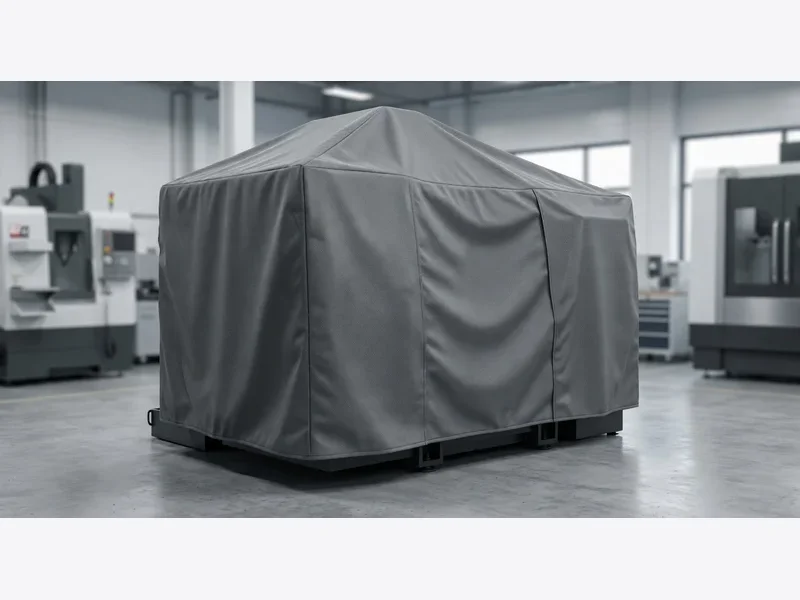
A maintenance supervisor at a food processing plant ordered custom covers for six packaging machines. The spec sheet said: "Cover for Model X packaging machine, waterproof, with zip access." The covers arrived. The zippers were on the wrong side. The covers were 4 cm too short because nobody specified whether dimensions included the machine's protruding control arm. The covers sat in a storage closet for three weeks while the maintenance team cut and re-stitched them by hand.
Total cost of the error: $3,200 in covers plus 18 hours of maintenance labour. The root cause was not a manufacturing defect. It was an incomplete spec sheet.
A custom machine cover OEM spec sheet is not a formality. It is the single document that translates your machine into a cover that fits, protects, and lasts. When the spec is complete, two suppliers quoting the same sheet should produce covers that are functionally identical. When it is not, you are paying to discover what you didn't write down.
This guide covers what to measure, which material to choose for your operating environment, how to specify closures, and the five spec mistakes that procurement teams make most often. At the end: a one-page checklist you can hand to your team before sending any RFQ.
Start With the Machine — The Five Measurements That Matter
The most common measurement error in machine cover procurement is measuring the machine's nameplate dimensions and stopping. Nameplate dimensions are the machine body — they do not include handles, control panels, cable glands, exhaust vents, or the 15 cm of conduit that sticks out the back.
A cover made to nameplate dimensions will not fit the machine in its working configuration.
Every OEM spec sheet for a custom machine cover must include these five measurements:
- Height (H) — from the floor to the highest point of the machine, including any top-mounted components. If the machine has an articulating arm or adjustable head, measure in both its stored and extended positions.
- Width (W) — the widest point of the machine in its operating configuration. Walk around the machine. Find the widest projection. That is the width.
- Depth (D) — front to back at the deepest point. If there is a cable tray or rear-mounted filter housing, include it. The cover must clear it.
- Clearance — the distance from the floor to the bottom edge of where the cover should stop. Standard clearance is 5–10 cm above the floor. Less than 5 cm and the cover drags on debris. More than 15 cm and the bottom of the machine is exposed.
- Hem circumference — the distance around the machine at the height where the hem will sit. This is the number that determines whether the cover grips or hangs loose. For elastic-hem covers, the hem circumference minus 5–8% is the target elastic length.
A photo beats a sketch. Include at least two photos with a tape measure held against each dimension. A photo of a tape measure against the machine removes the question "is this dimension total or body only?" that will otherwise generate three rounds of email before the quote.
For machines with irregular geometry — tapered housings, offset control boxes, protruding flanges — add a third photo from a 45-degree angle showing the relationship between the body and the protrusion.
If the cover needs cut-outs for access panels, ventilation grilles, or cable exits, mark their position on a printout of the photo with dimensions from two reference edges. Text descriptions of cut-out positions ("near the top left") produce covers with cut-outs in the wrong place.
Material Selection: 600D PVC vs Silicone Fiberglass vs PE
Material is the single largest driver of both cost and service life. Choose the wrong material and the cover fails regardless of how well it is sewn. The three materials that cover 90% of industrial machine cover applications are listed below, with the conditions each one handles and the conditions each one cannot survive.
| Material | Temp Range | UV Life | Water Resistance | Best For | Do NOT Use For |
|---|---|---|---|---|---|
| 600D Oxford + PU/PVC Coating | -20°C to 80°C continuous | 18–30 months | High (≥3000 mm hydrostatic head) | General industrial outdoor covers, forklifts, generators, CNC enclosures | Direct contact with surfaces above 100°C; foundry equipment; chemical splash zones |
| Silicone-Coated Fiberglass | -50°C to 260°C continuous; 550°C short-duration | 36–60 months | Excellent | Engine exhaust covers, furnace insulation jackets, turbine covers, hot pipe wraps | Applications requiring abrasion resistance — silicone surfaces abrade faster than coated Oxford under mechanical rubbing |
| PE (Polyethylene) Woven | -10°C to 60°C | 3–6 months | Moderate | Indoor dust covers, short-term storage, one-time shipment protection | Any outdoor application; any application where the cover is removed and replaced daily — PE loses flexibility and tears at fold lines |
The spec line that matters most. For 600D Oxford covers, always specify coating type (PU or PVC), coating weight in g/m², and whether coating is single-side or double-side. A spec that reads "600D Oxford, waterproof" leaves the supply network free to use the lowest-cost variant — typically 600D with PU at 2 g/m². A spec that reads "600D Oxford polyester, PU coating double-side at minimum 5 g/m², target GSM 200–230" closes that gap.
The difference in coating weight alone can halve or double the cover's outdoor service life.
Thread specification. The thread is a $0.15-per-cover line item that determines whether seams hold. For all outdoor covers, specify bonded polyester thread with UV stabiliser at Tex 70 minimum (210D/3 ply). Standard polyester thread without UV inhibitors loses 30–50% of tensile strength after 500 hours of UV exposure per ASTM G154. Do not accept nylon thread — it absorbs moisture, swells, and weakens in wet conditions.
Closure Types: The Interface That Gets Cycled Every Day
The closure is the part of the cover the operator touches every shift. If it fails, the cover cannot perform its only function — staying on the machine. Closure selection is a usability decision, not an afterthought.
Elastic hem. Best for machines with uniform geometry and daily removal cycles. The operator pulls the cover off and pushes it back on — no buckles, no drawstrings. Specify elastic width (minimum 25 mm for covers over 1 m in any dimension), elongation percentage, and request a 100-cycle recovery test if the cover will be removed more than once per shift. Elastic hems fail gradually — you will see bagging before they stop gripping — so they degrade visibly rather than catastrophically.
Drawstring with cord lock. Best for irregularly shaped machines where an elastic hem cannot distribute tension evenly. The drawstring allows the operator to cinch the cover tight at the specific circumference needed. Specify cord diameter (minimum 5 mm polyester, not polypropylene — polypropylene stiffens and cracks after one winter), channel width, and lock type (spring-loaded barrel lock, not toggle). A toggle lock loosens under vibration. A spring barrel lock does not.
Velcro (hook-and-loop) panels. For covers that need partial access — a split front panel to reach controls without removing the entire cover. Specify sew-on Velcro (never adhesive-backed — adhesive fails within 90 days of outdoor exposure), width minimum 25 mm, and length. Velcro strips shorter than 100 mm do not hold reliably on curved surfaces under tension.
YKK zipper. For precision-fit covers requiring a complete seal — CNC way covers, instrument enclosures, cleanroom equipment. Specify coil or vislon type, gauge number (#5 for light-duty, #8–10 for covers over 2 kg), and corrosion-resistant slider (stainless steel or acetal, never nickel-plated). A zipper on a machine cover needs to operate while the cover is under tension — specify a double-slider configuration so the operator can open from either direction.
Environment Factors That Change the Material Decision
The same machine in two different environments needs two different covers. A CNC router in an air-conditioned shop floor needs a dust cover. The same CNC router under a lean-to in a coastal yard needs UV resistance, salt-spray resistance, and water-shedding geometry.
The spec sheet must state the environment before the material is chosen. Material follows environment. Never the reverse.
Indoor, dry, ambient temperature. The simplest case. Dust is the primary hazard. A 420D Oxford with light PU coating or a PE woven cover will perform adequately. Ventilation is more important than waterproofing — a fully sealed cover in a humid indoor environment traps condensation against the machine surface. Specify a mesh ventilation panel if the ambient humidity exceeds 60%.
Outdoor, exposed, temperate climate. UV is the primary degradation mechanism. The cover must be UV-stabilised at the fabric, coating, and thread levels. 600D Oxford with PU coating at 5–6 g/m² and UV-stabilised bonded polyester thread is the baseline. All seams on the top panel and any horizontal surface must be welded or taped — a stitched seam on a horizontal panel is a water channel.
Outdoor, coastal or chemical exposure. Salt spray and chemical mist attack metal hardware before they attack fabric. Every metal component — zipper sliders, eyelets, buckles, D-rings — must be 304 stainless steel. Plastic hardware must be acetal (POM) or UV-stabilised nylon 6/6. Zinc-plated or nickel-plated hardware rusts within 90 days of coastal exposure and stains the cover fabric.
High-temperature proximity. If the cover will sit within 30 cm of an exhaust manifold, engine block, or any surface that exceeds 100°C during operation, 600D Oxford is the wrong material. The coating delaminates, the polyester yarn melts at 260°C but loses structural integrity well below that. Silicone-coated fiberglass is the only material rated for continuous contact above 100°C. Specify the maximum surface temperature the cover will encounter, not just the ambient air temperature.
Oil and cutting fluid environments. Machine shops with oil mist and cutting fluid spray need covers with oil-resistant coatings. Standard PU coating absorbs oil over time, softening the coating and reducing water resistance. Specify PVC coating or TPU laminate for oil-rich environments. PE is unsuitable — it degrades on contact with most cutting fluids.
Five Spec Mistakes That Cost More Than the Cover
These five errors appear in roughly 40% of the RFQs received by industrial cover supply networks. Each one produces a cover that fails or a quote that cannot be compared.
1. Omitting coating weight. "600D Oxford" specifies the yarn thickness — it says nothing about the waterproof coating. Two 600D Oxford fabrics can differ in coating weight by a factor of 3x. A 2 g/m² PU coating lasts 6–9 months outdoors. A 6 g/m² PU coating lasts 18–30 months. Both are "600D Oxford." The spec must state coating type, coating weight, and single-side vs double-side.
2. Specifying cut size instead of finished size. Fabric panels are cut larger than the finished cover to allow for seam allowance. If the spec says "Width: 120 cm" without stating whether that is the cut panel or the finished cover, two suppliers will build two different covers. Always state "finished cover dimensions" and let the supply network calculate the cut size from their standard seam allowance.
3. Not specifying stitch density. A spec that says "stitched seams" without stitches per inch (SPI) leaves seam quality to chance. Standard industrial practice is 7–9 SPI on main seams and 9–11 SPI at stress points. Below 6 SPI, seams pull apart under load. The cost difference between 5 SPI and 8 SPI is approximately $0.08 per cover in machine time and thread. The cost of a seam failure is the entire cover.
4. Leaving hardware material unspecified. A drawstring cord lock specified as "cord lock" defaults to the cheapest available — typically unfilled polypropylene that embrittles after one season of UV. Specify the material for every hardware component: "spring-loaded barrel cord lock, acetal (POM), UV-stabilised, for 5 mm cord." The difference in unit cost is $0.03. The difference in service life is 5x.
5. Not requesting a pre-production sample. A pre-production sample is a single cover built to the exact spec, using the exact materials, before the production run begins. It costs $50–150 and takes 5–7 days. It is the only way to verify that your measurements, your material choices, and your closure spec all work together on a real cover. Skipping it means discovering fit problems when 500 covers arrive on a pallet.
The One-Page Spec Checklist: What to Send for an Accurate Quote
The checklist below covers every field a supply network needs to produce a quote that can be compared across suppliers. Print it. Fill it out. Attach it to your RFQ.
Custom Machine Cover Spec Checklist
Machine Information
- ☐ Machine make, model, and year
- ☐ Machine function (CNC router, packaging machine, generator, etc.)
- ☐ Operating environment (indoor/outdoor, temperature range, exposure to UV/oil/chemicals/salt)
- ☐ Installation location (floor-standing, benchtop, mobile, overhead)
Dimensions (finished cover)
- ☐ Height: _____ cm (floor to highest point, including protrusions)
- ☐ Width: _____ cm (widest point in operating configuration)
- ☐ Depth: _____ cm (deepest point, front to back)
- ☐ Floor clearance: _____ cm (distance from floor to bottom hem)
- ☐ Hem circumference: _____ cm (at the intended hem height)
- ☐ Photos attached: ☐ Front ☐ Side ☐ 45° angle (all with tape measure visible)
Material Specification
- ☐ Base fabric: _____ (600D Oxford / silicone fiberglass / PE woven / other)
- ☐ Coating type: _____ (PU / PVC / TPU / silicone / none)
- ☐ Coating weight: _____ g/m² (single-side or double-side)
- ☐ Thread: bonded polyester, UV-stabilised, Tex 70 minimum
- ☐ Seam type: double-stitched fell seam (ISO 4916 type 2.04.06)
- ☐ Stitch density: 7–9 SPI main seams / 9–11 SPI stress points
Closure & Access
- ☐ Closure type: _____ (elastic hem / drawstring + cord lock / Velcro / YKK zipper)
- ☐ Hardware material: _____ (acetal / 304 stainless / nylon 6/6 UV-stabilised)
- ☐ Access panels: ☐ None ☐ Yes — mark positions on photo
- ☐ Ventilation: ☐ Not needed ☐ Mesh panel at location: _____
Order Details
- ☐ Quantity: _____ units
- ☐ Packaging: individual polybag ☐ bulk pack ☐
- ☐ Branding: ☐ None ☐ Logo print — attachment: _____
- ☐ Pre-production sample required: ☐ Yes ☐ No
- ☐ QC standard: ISO 2859-1 AQL 2.5 normal inspection level
A complete checklist produces quotes from two supply networks that can be compared line by line. An incomplete checklist produces two quotes that represent two different covers — and six weeks of emails to reconcile them.
If you fill out only one section before sending the RFQ, make it the environment section. Material follows environment. Everything follows material.
Need Help With Your Machine Cover Spec?
Send us your machine details and environment conditions. We return material recommendations at two price points and a completed spec checklist — within 48 hours.
Request a Spec Review →Frequently Asked Questions
What measurements do I need to spec a custom machine cover?
Five measurements: height, width, and depth of the machine including all protrusions (handles, control panels, cable glands); clearance from the floor to the bottom hem (typically 5–10 cm); and the circumference at the hem line. Always include photos with a tape measure visible against each dimension. For irregularly shaped machines, add a 45-degree angle photo.
Which material should I choose: 600D PVC, silicone fiberglass, or PE?
600D Oxford with PU or PVC coating for general industrial outdoor use (up to 80°C, 18–30 months UV life). Silicone-coated fiberglass for high-temperature environments — rated to 260°C continuous, used for engine exhaust covers, furnace jackets, and turbine covers. PE woven for indoor-only dust covers and short-term storage — degrades within 3–6 months under UV. The environment determines the material; never choose material before stating the environment.
What closure type should I specify?
Elastic hem for uniform-shaped machines with daily removal cycles — simplest and most operator-tolerant. Drawstring with spring-loaded barrel cord lock for irregular shapes needing adjustable cinching. Velcro panels for covers requiring partial access without full removal. YKK zipper (double-slider, stainless or acetal) for precision-fit covers that must seal completely. Never leave hardware material unspecified — unfilled polypropylene cord locks fail in one outdoor season.
What is the single most common spec mistake?
Omitting coating weight. "600D Oxford" specifies yarn thickness only — it says nothing about the waterproof coating. Two 600D Oxford fabrics can differ in coating weight by a factor of 3x, producing outdoor service lives that range from 6 months to 30 months. Always specify coating type (PU/PVC), coating weight (g/m²), and single-side vs double-side.
Why request a pre-production sample?
A pre-production sample is a single cover built to your exact spec before the production run begins. It costs $50–150 and takes 5–7 days. It is the only way to verify that your measurements, material choices, and closure spec work together on a real cover. Without it, fit problems are discovered when the full order arrives — and 500 covers that do not fit are 500 covers you cannot use.
Frequently Asked Questions
Who is this guide for?
Procurement managers, maintenance supervisors, and OEM buyers who need to spec custom protective covers for industrial equipment and want quotes they can compare.
What if my machine has an irregular shape?
Include a dimensioned sketch or CAD reference with your RFQ. Take photos from three angles with a tape measure held against each dimension. Mark the position of any protrusions, access panels, or cut-outs on a printout of the photo with measurements from two reference edges.
What does a custom machine cover typically cost?
Industrial-grade custom covers range from $30–400+ per unit depending on size, material, and quantity. A 600D Oxford cover for a standard CNC machine typically runs $50–120 at MOQ 50 units. Silicone fiberglass covers cost 2–3x the Oxford equivalent due to material cost.
How long does the OEM process take?
First-time orders: 6–8 weeks from approved spec to shipment. Pattern-making and sample approval: 1–2 weeks. Material procurement: 1–2 weeks. Production: 2–3 weeks. QC and packing: 1 week. Repeat orders with existing patterns: 3–4 weeks.
Can I get covers for machines exposed to chemicals?
Yes. For oil mist and cutting fluid environments, specify PVC coating or TPU laminate instead of standard PU — PU absorbs oil and degrades. For acid or alkali exposure, silicone-coated fiberglass with chemical-resistant coating. Always state the specific chemical and concentration in the environment section of the spec sheet.
What QC standards should I require?
Specify ISO 2859-1 AQL 2.5 normal inspection level for final QC. Request inline QC during production (1 unit per 50 checked for dimensions and seam quality). Require a pre-shipment inspection report with photos to accompany shipping documents.