Water Treatment & Oilfield Equipment Covers Guide
Oilfield and water treatment equipment spends most of its life outdoors. Skid-mounted packages, dissolved air flotation (DAF) units, pumps and chemical dosing skids sit on project sites with no roof overhead. Rain reaches control panels, junction boxes and motors, and the damage shows up as downtime at the worst moment.
A generic tarp is not the answer. Most tarps fail within one rainy season because they were never built for the unit. This guide covers what to specify: fabric, anchor points, manual versus hydraulic systems, and sizing from drawings.
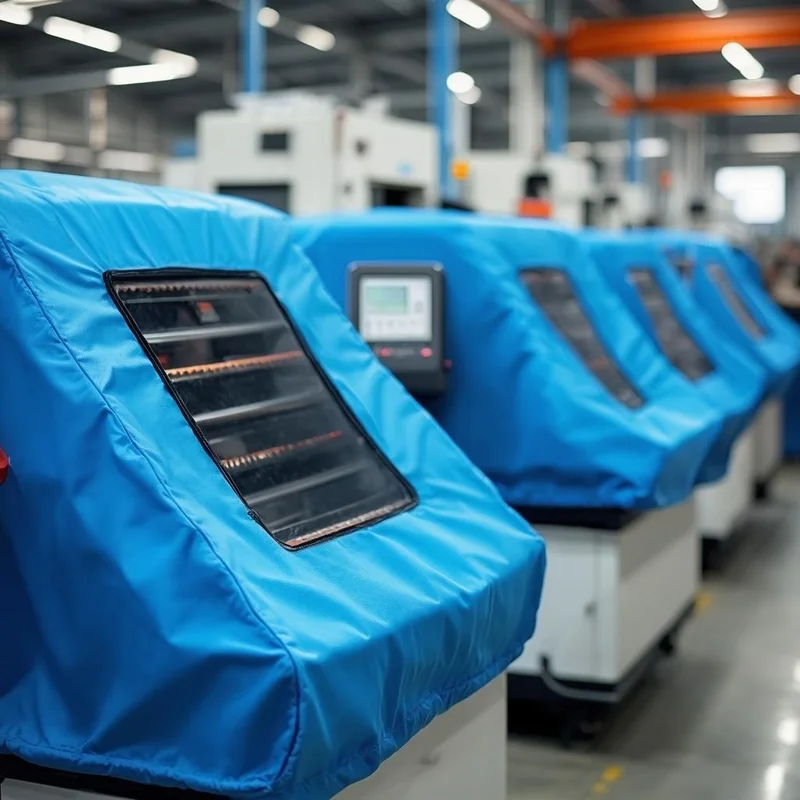
Why Generic Tarps Fail on Process Equipment
The first failure is fit. A rectangular tarp cannot wrap a unit with protruding pipe flanges, valve stems and pump heads. Water finds the gaps and drains straight onto the parts that must stay dry.
The second failure is anchoring. Tarps tied around corners flap in wind, bending the fabric at the tie points until corners tear.
The third is condensation. A sealed tarp traps heat and moisture rising off the equipment, and that microclimate corrodes terminals and grows mildew on interior surfaces.
The fourth is UV. In the Gulf, coastal and high-sun regions, a cheap tarp loses strength within a season and sheds fragments that can foul equipment.
None of these failures is exotic. They are why process companies move from off-the-shelf tarps to a cover built for the unit.
What a Process Unit Cover Needs on the Spec Sheet
These are the spec lines that matter for process equipment.
| Spec Area | Why It Matters | Typical Spec |
|---|---|---|
| Fabric weight and coating | Rain and oil exposure | 600D+ Oxford with PVC coating; heavy tarpaulin for wet duty |
| UV stabilization | Sun degradation | Stabilizers mixed into the coating, not sprayed on |
| Oil and chemical resistance | Hydrocarbon mist and spills | PVC-coated face wipes clean; sealed seams prevent wicking |
| Anchoring | Wind load | Webbing loops and D-rings sewn to the hem |
| Skirt length | Pipe connections and valve stems | 300-500 mm below the widest protruding fitting |
| Venting | Condensation control | Low mesh vents on opposite sides; sloped top for runoff |
| Access | Gauge and control access | Zippered panels over control panels and sight glasses |
| Fire retardancy | Sites with ignition sources | FR-treated fabric meeting NFPA 701 or ASTM E84 |
Most of these are cheap at the pattern stage and impossible to add after cutting. Put them on the RFQ before sampling.
Manual or Hydraulic Tarp System?
Most mobile process units get covered a few times per month, before rain, overnight, or when parked between jobs. A manual pull-over cover is the right system for that duty: one operator drapes it, clips the webbing straps to existing anchor points, and tightens the side tensioners.
Hydraulic systems make sense when the cover is heavy, cycled daily, or handled by one operator. The moving parts add cost, maintenance and failure modes; on a single unit around 3 m high, hydraulic lift is usually over-engineering.
The practical limit is simple: can one operator lift and drape the cover without a ladder? If yes, manual. If the cover is heavy, cycled daily, or beyond comfortable reach, look at a lift-assist option.
The tarp system is not bolted to the equipment. It anchors to existing frame points and comes off when not needed, keeping the unit free for transport, crane lifts and maintenance access.
Sizing a Cover from Drawings
Consider a typical scenario: a skid-mounted DAF unit around 2.9 m long, 1.0 m wide and 2.9 m high, with a pump head on one end and a control panel on one side. Size the cover from the drawing, not from the overall dimensions alone.
Allowance rules are simple: add 100-150 mm of overhang per side so the cover clears fittings without stretching, drop the skirt 300-500 mm below the lowest protruding fitting, and keep the top sloped so water runs off instead of pooling.
| Measurement | Unit Dimension | Cover Allowance | Final Size |
|---|---|---|---|
| Length | 2.9 m (113 in.) | +100-150 mm per side | About 3.2 m |
| Width | 1.0 m (39 in.) | +100-150 mm per side | About 1.3 m |
| Height | 2.9 m (115 in.) | Skirt +300-500 mm | About 3.3-3.4 m |
The anchor points matter more than the numbers. On units with a top frame and lifting lugs, the cover straps to those points and needs no separate support structure. A cover patterned to the wrong anchor layout will not fit, no matter how accurate the length is.
Send the drawing with site conditions; the factory can return a pattern proposal before cutting.
Material Choice for Oil, Chemical and Desert Conditions
For oilfield and water duty, PVC-coated 600D Oxford is the workhorse. The coated face wipes clean after oil mist exposure, and sealed seams stop oil and water from wicking into the thread. Heavy PVC tarpaulin suits constant rain but stiffens and cracks in cold weather; TPU-lined fabric is the cold-climate option; FR-treated polyester covers sites with ignition sources.
UV is about the coating. Stabilizers mixed in outlast sprayed-on treatments, and lighter colors run cooler in direct sun. For Gulf and high-sun sites, ask for the UV package up front. For a full breakdown by denier and backing, our custom cover material guide goes deeper.
Buyer's Checklist Before You Quote
These checks separate a cover that protects for years from one that fails in a season.
1. Confirm anchor points and frame layout. Verify where the cover straps attach; our custom cover spec guide walks through every line item.
2. Put access panels on the pattern spec. Zippered panels over control panels and sight glasses mean operators never cut the cover open to read a gauge.
3. Specify venting and slope at the pattern stage. Condensation complaints are expensive to fix later; the generator cover weatherproofing guide shows vent placement on a similar unit.
4. Confirm the fire-retardant standard. If the site has ignition sources, name it on the RFQ; see our fire-retardant covers guide for testing methods.
5. Match the fabric to climate and chemical exposure. Gulf sun, coastal salt and chemical mist change the spec; our industrial cover durability guide explains how coatings fail in service.
6. Ask how the factory tests durability. Flex cycles, seam strength and UV aging separate a real spec from a brochure. If surfaces run hot, add the high-temperature insulation requirement.
For the full product range, see the equipment covers page.
A rain cover on a process unit is not a tarp with a logo. It is a pattern engineered to the unit: fit around fittings, anchors at the right points, venting where moisture collects, fabric matched to the climate. That difference shows in the first rainy season.
Send the drawings and site conditions. You get a spec proposal, not a generic quote.
Frequently Asked Questions
Do I need a manual or hydraulic tarp system for my unit?
For a unit that is covered a few times per month, a manual pull-over cover is usually the right system. One operator drapes it and clips the straps to the frame anchor points. Hydraulic systems add cost and moving parts; they pay off only when the cover is heavy, cycled daily, or hard to reach without a ladder.
What fabric resists oil and chemical exposure?
Specify a PVC-coated 600D or heavier Oxford. The coated face wipes clean after oil mist and spill exposure, and sealed seams stop oil and water wicking into the thread. Uncoated polyester absorbs oil and degrades faster. For sites with ignition sources, add an FR-treated option.
Can rain covers be made fire-retardant for oilfield sites?
Yes. FR-treated polyester fabrics can meet NFPA 701 and ASTM E84. Confirm the specific standard required by the site and put it on the RFQ before sampling.
How should a cover be sized from a drawing?
Add 100-150 mm of overhang per side beyond the unit's widest point, drop the skirt 300-500 mm below the lowest protruding fitting, and keep the top sloped for runoff. Most important, confirm the frame anchor points on the drawing, because the cover straps to them.
Ready to Source Oilfield Equipment Covers?
Contact Custom Machine Cover with your unit drawings and site conditions. We will confirm the pattern, materials and lead time.
Request a QuoteSources & Industry References
- NFPA 701: Standard Methods of Fire Tests for Flame Propagation of Textiles and Films
- ASTM E84: Standard Test Method for Surface Burning Characteristics of Building Materials
- ASTM B117: Standard Practice for Operating Salt Spray (Fog) Apparatus