Application Solutions
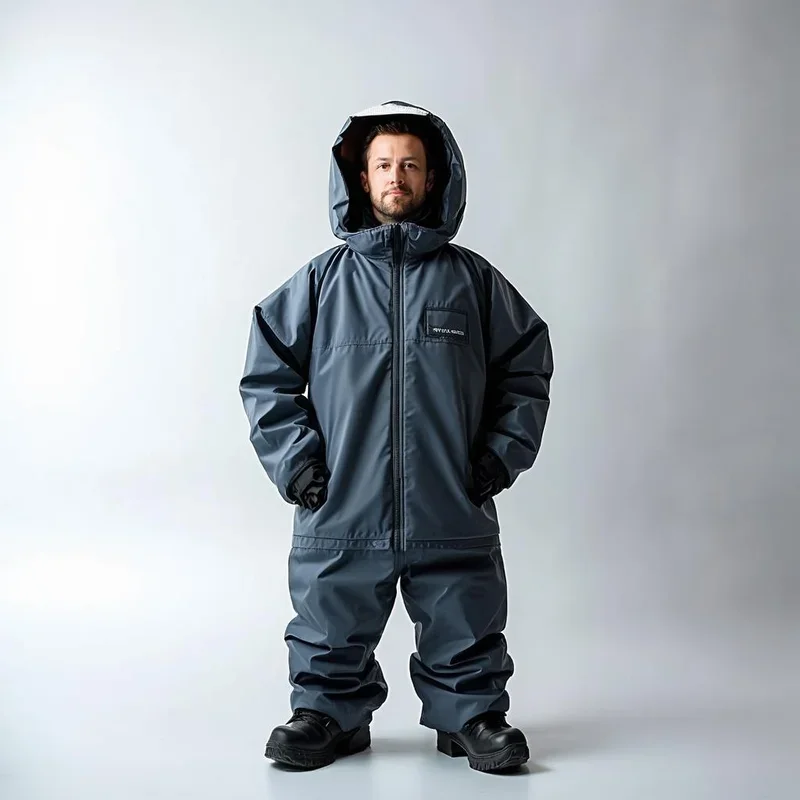
Mining & Heavy Industry Equipment Covers
Built for environments where standard covers don't survive the first shift. Abrasive dust, falling debris, high vibration — these are not edge cases in mining, they are the baseline.
The Challenge: Three Stressors That Destroy Standard Covers
Mining operations, quarries, steel mills, and heavy manufacturing plants present a combination of environmental stressors that no single-layer, general-purpose cover can handle. A cover that survives three years in a machine shop will be shredded in three months at a mine site.
1. Abrasive Dust — The Silent Sandblaster
Silica dust from crushing operations, coal fines from conveyor transfers, iron ore particulates from screening — these particles don't just settle on covers. In the constant air movement of mining and processing facilities, they act as a low-grade sandblaster. Standard 600D Oxford with PU coating loses its water-resistant surface within 2–3 months of abrasive dust exposure. Once the coating is gone, the base fabric has no protection.
2. Impact & Falling Debris
Rock spall from blasting, ore fragments from conveyor transfer points, tools dropped from service platforms — impacts that would bounce off a standard cover instead puncture it. A single puncture in a single-layer cover compromises the entire unit. In mining environments, impact resistance is not a nice-to-have — it is the difference between a cover that protects and one that is itself a debris hazard.
3. High Vibration — The Constant Abrader
Crushers, vibrating screens, ball mills, and conveyor drives generate continuous vibration that transfers through the equipment frame into the cover. At contact points — where the cover touches the machine — this vibration acts as a constant abrasion mechanism. Standard covers develop wear-through holes at contact points within weeks. Mining-grade covers use reinforced panels and standoff spacers to isolate the cover from vibration sources.
Material & Construction: The Multi-Layer Defense System
Mining-grade covers are not made from a single material. They are engineered as a system — each layer performs a specific protective function.
Layer 1: PVC Vinyl Outer Shell — Abrasion Shield
The outer layer takes the beating so the inner layers don't have to. PVC Vinyl is inherently abrasion-resistant — its dense, non-porous surface resists the sandblasting effect of airborne dust far better than PU-coated Oxford. It is also chemically resistant to hydraulic fluids, grease, and the hydrocarbon contaminants common in mining and heavy industry.
- Abrasion resistance: Taber abrasion (CS-17 wheel, 1kg load) exceeds 2,000 cycles before coating failure.
- Chemical resistance: Unaffected by hydraulic oil, diesel, grease, and common mining chemicals.
- Cleanability: Dust and grime wipe off or hose down. No embedded particulates abrading from the inside.
- UV stability: UV-stabilized formulation for open-pit and surface mining operations with 24/7 sun exposure.
Layer 2: Tear-Stop Structural Fabric — Puncture Containment
The middle layer is the structural backbone. Tear-stop (ripstop) fabric incorporates a reinforced grid pattern — typically nylon or high-tenacity polyester threads woven at 5–8 mm intervals — that prevents small punctures from propagating into large tears.
- Tear propagation resistance: A puncture that would tear 30 cm through standard fabric is contained to under 2 cm with ripstop reinforcement.
- Tensile strength: Warp >1,500 N, weft >1,200 N per ISO 13934-1.
- Grid density: 5 mm × 5 mm ripstop grid for maximum tear containment in high-impact environments.
Layer 3: Reinforced Panels & Steel Grommets — Wear-Point Armor
The highest-wear zones — corners, edges, grommet areas, and equipment contact points — receive double-layer reinforcement. These sacrificial panels are designed to wear through before the main cover body, extending total service life by 50–80% compared to single-layer construction.
- Double-layer corners: All 8 corners reinforced with additional PVC Vinyl panel, double-stitched and heat-sealed.
- Steel grommets: Zinc-plated or powder-coated steel. Withstands >200 kg tension without deformation. Spaced at 60 cm intervals for uniform load distribution.
- Edge binding: Heavy-duty webbing edge binding prevents fraying and adds tear resistance at the cover perimeter.
Standard vs. Mining-Grade: Why the Difference Matters
| Feature | Standard Industrial Cover | Mining-Grade Cover |
|---|---|---|
| Outer material | 600D Oxford + PU coating | PVC Vinyl — abrasion & chemical resistant |
| Structural layer | Single-layer | Tear-stop ripstop grid — puncture containment |
| Wear points | No reinforcement | Double-layer panels at all corners, edges, grommet zones |
| Grommets | Brass or plastic | Zinc-plated steel — 200+ kg tension rating |
| Abrasion cycles (Taber) | ~500 cycles to coating failure | 2,000+ cycles to coating failure |
| Tear containment | Puncture propagates freely | Contained to <2 cm by ripstop grid |
| Expected service life (mining) | 3–6 months | 3–5 years |
The cost difference between standard and mining-grade construction is typically 2–3× per unit. But when a $120 cover lasts 40 months instead of a $45 cover lasting 4 months, the total cost of ownership favors the mining-grade option by a factor of 2.6:1 — before you count the downtime cost of replacing covers every quarter.
Explore our Machine Covers for standard industrial applications, or visit Equipment Covers for custom solutions across all equipment types.
Operating in Mining or Heavy Industry?
Send us your site conditions — dust type, impact risk, vibration levels — and we'll engineer a cover that survives where standard covers fail.
Request Mining-Grade Cover SpecFurther Reading
For a comprehensive guide to heavy-duty equipment cover specifications, material grades, and selection criteria for demanding industrial environments, read our Heavy Duty Equipment Covers: Complete Selection Guide.
Frequently Asked Questions
What makes mining equipment covers different from standard industrial covers?
Mining and heavy industry covers face three stressors that standard covers are not designed for: abrasive dust (silica, coal, ore particles) that sandblasts cover surfaces and erodes standard coatings within months, impact from falling debris and rock spall that punctures single-layer fabrics, and continuous high-frequency vibration from crushers, screens, and conveyors that abrades fabric at contact points. Mining-grade covers use multi-layer construction, tear-stop fabric reinforcement, sacrificial outer panels, and steel grommets — features that are minimum requirements for mining environments.
What is the best material for mining and quarry equipment covers?
The optimal construction for mining environments is a multi-layer system: PVC Vinyl outer shell (abrasion and chemical resistant, easy to clean), tear-stop ripstop fabric as the middle structural layer (prevents small punctures from propagating into large tears), and a softer inner lining to protect equipment surfaces. This three-layer system, combined with double-layer reinforced panels at high-wear zones and steel grommets, delivers 3–5 years of service in environments where standard 600D Oxford covers fail within 3–6 months.
Why use steel grommets instead of brass or plastic?
Steel grommets are specified for mining and heavy industry because they resist deformation under the high tension loads required to secure covers in windy, high-vibration environments. Brass grommets deform at roughly 60% of the tension steel can handle. Plastic grommets crack in cold weather and shatter on impact. Steel grommets with zinc or powder coating provide corrosion resistance without sacrificing strength — critical when a loose cover in a mining environment becomes a safety hazard within minutes.
Related Applications