Application Solutions
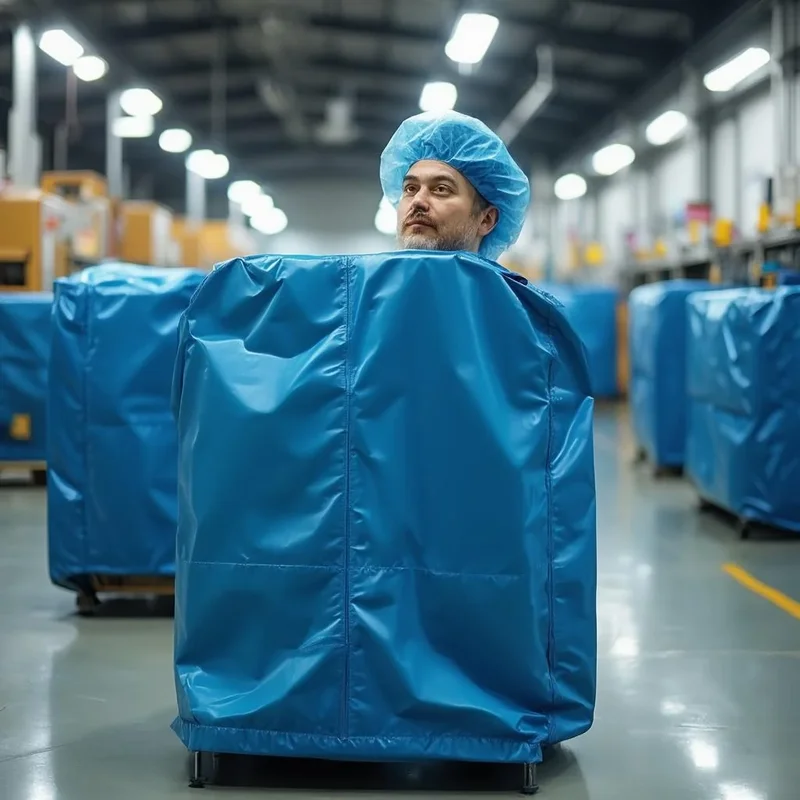
Oil & Coolant Resistant Equipment Covers
Engineered to withstand continuous exposure to metalworking fluids, cutting oils, hydraulic mist, and industrial chemicals. Standard fabrics fail — ours are built different.
The Problem: Standard Fabrics Fail in Oil-Rich Environments
Metalworking shops, CNC machining centers, and hydraulic press lines share one common enemy: airborne oil and coolant mist. Cutting oils atomize during high-speed machining. Hydraulic systems weep at seals. Coolant spray hits everything within a 3-meter radius.
Standard machine covers — even "heavy-duty" ones built with 600D Oxford and PU coating — degrade rapidly in these conditions. Here's why:
Chemical Embrittlement
Petroleum-based cutting oils and synthetic coolants act as plasticizers on standard PU coatings. Within 3–6 months of continuous exposure, the coating loses flexibility. The cover becomes brittle, cracks at fold points, and loses all water resistance.
Wick Degradation
Oil penetrates stitch holes through capillary action and spreads laterally through the fabric structure. It delaminates the PU coating from the base fabric. Once delamination starts — and it starts within weeks in heavy oil environments — the cover loses structural integrity.
A cover that costs $45 per unit but lasts 6 months is not cheaper than a cover that costs $85 and lasts 3 years. The real cost is the machine downtime, replacement labor, and the risk of oil-contaminated product when the cover fails mid-shift.
Recommended Materials for Oil & Coolant Protection
Two materials deliver proven performance in oil-rich industrial environments. The right choice depends on your specific exposure level and operating conditions.
PVC Vinyl — Heavy-Duty Oil Barrier
PVC Vinyl is the gold standard for oil and coolant resistance. The material is inherently oil-repellent — petroleum-based fluids bead on the surface rather than absorbing. It is 100% waterproof, wipes clean with a rag, and resists most industrial chemicals including synthetic coolants, hydraulic fluids, and way oil.
- Oil resistance: Excellent — petroleum fluids do not penetrate or degrade PVC.
- Waterproof rating: 100% waterproof, zero water ingress at seams (heat-welded).
- Temperature range: -10°C to +70°C continuous. Avoid below -15°C where PVC stiffens.
- Maintenance: Wipe-down clean. Resistant to most industrial degreasers.
- Cost position: Mid-range. Lower cost per square meter than PU Leather, higher than standard Oxford.
Best for: CNC machining centers, hydraulic press covers, coolant splash guards, grinding machine enclosures with heavy fluid exposure.
PU Leather — Chemical Resistance + Cold Flexibility
PU Leather combines chemical resistance with superior cold-weather flexibility. The four-sided elastic PU construction uses a wet/dry manufacturing process that creates a dense, non-porous surface resistant to chemical attack. Unlike PVC, it remains flexible to -25°C — critical for unheated workshops in northern climates.
- Chemical resistance: Superior — resists cutting oils, synthetic coolants, and mild acids.
- Cold performance: Remains flexible to -25°C. No cold-crack risk in unheated facilities.
- Surface finish: Scratch-resistant, waterproof, with excellent hand feel and appearance.
- Durability: High abrasion resistance. Outlasts standard PU-coated fabrics by 2–3× in chemical environments.
- Cost position: Premium. Higher material cost offset by 3× longer service life.
Best for: Cold-climate workshops, food-grade oil environments, precision equipment requiring both chemical resistance and appearance, applications with frequent cover removal/reinstallation.
Why Heat-Welded Seams Are Non-Negotiable
In oil and coolant environments, seam construction determines cover performance more than material choice. A PVC Vinyl cover with sewn seams will leak within weeks through the stitch holes — regardless of how oil-resistant the base material is.
| Seam Type | Oil Resistance | Waterproof | Lifespan in Oil Environment |
|---|---|---|---|
| Single-needle lockstitch | ❌ Fails within weeks | ❌ Leaks through stitch holes | 1–3 months |
| Double-needle with seam tape | ⚠️ Tape degrades from oil | ⚠️ Delays failure, doesn't prevent it | 3–6 months |
| RF / Hot-air welded | ✅ Zero penetration | ✅ 100% waterproof | 3–5 years |
At Heinz Industrial, every oil and coolant resistant cover is manufactured with RF (radio frequency) or hot-air welded seams. The material is fused at the molecular level — there are no stitch holes, no needle penetrations, and no leak paths. This is the same seam technology used in military-grade chemical protective equipment.
For standard equipment protection, see our Machine Covers page. For custom solutions across all equipment types, visit Equipment Covers.
Need Oil-Resistant Covers for Your Facility?
Tell us your machine type, coolant chemistry, and operating environment. We'll recommend the right material with ISO-tested chemical resistance data.
Request Material RecommendationFurther Reading
For a complete guide to industrial cover materials — including fabric grades, coating chemistries, and environment-specific selection criteria — read our comprehensive Custom Machine Cover Material Guide.
Frequently Asked Questions
What material is best for oil and coolant resistant machine covers?
Two materials deliver the best oil and coolant resistance for industrial machine covers: PVC Vinyl (excellent oil resistance, fully waterproof, easy wipe-down clean) and PU Leather (superior chemical resistance, four-sided elastic construction, cold-flex performance to -25°C). For the highest protection in metalworking environments with continuous exposure to cutting oils and hydraulic mist, PVC Vinyl with heat-welded seams is the top recommendation.
Why should seams be heat-welded instead of sewn for oil-resistant covers?
Sewn seams create needle holes that wick oil and coolant through the cover via capillary action. Even with bonded polyester thread, each stitch hole is a potential leak path. Heat welding (RF or hot-air) fuses the material at the molecular level, creating a continuous barrier with zero penetration points. In chemical and oil-resistant applications, heat-welded seams are the difference between a cover that protects and one that leaks within weeks.
How do standard fabrics fail in oil and coolant environments?
Standard polyester and nylon fabrics degrade through two mechanisms: (1) Chemical embrittlement — petroleum-based cutting oils and synthetic coolants plasticize the PU coating, causing it to lose flexibility and crack within 3–6 months. (2) Wick degradation — oil penetrates stitch holes and spreads laterally through the fabric structure, delaminating the coating from the base fabric. Once delamination starts, the cover loses all water and chemical resistance within weeks.
Related Applications