Custom Machine Cover Factory: How to Evaluate, Audit, and Partner with an OEM Manufacturer
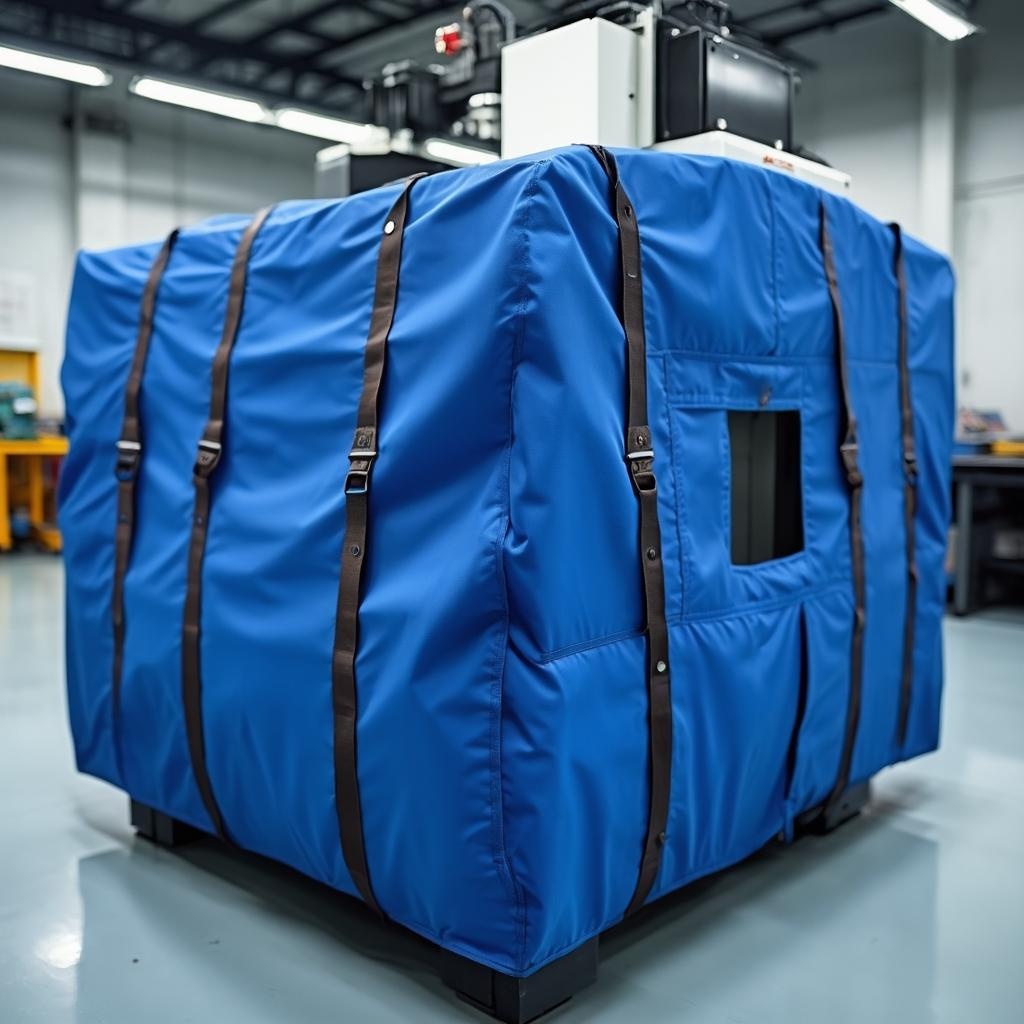
A plant manager in Stuttgart emailed us in February.
He had sourced 800 CNC lathe covers from a factory in Zhejiang province — $28.50 per unit FOB, 600D Oxford with PU coating, reinforced seams, custom logo.
The factory had an ISO 9001 certificate on the wall. The pre-production sample looked perfect.
Six months later, 140 covers had failed: seam splitting along the top corner, drawstring channels delaminated, and fabric fading that made the custom-branded covers look five years old after one season.
He flew to the factory. What he found explained everything: the ISO certificate was three years expired.
The cutting table was out of alignment by 4 mm — every cover in the batch was cut slightly off-grain.
The fabric storage area had no climate control; 600D Oxford rolls were absorbing moisture through an unsealed concrete floor. The factory manager admitted they had switched thread suppliers mid-production to save ¥0.18 per cover.
Nobody had told the Stuttgart buyer.
The per-unit price was competitive. The factory was not. That distinction cost €12,400 in warranty claims, three lost distributor relationships, and a container of covers that went to a shredder instead of a warehouse.
Choosing the right custom machine cover factory is the single highest-leverage decision in a B2B protective cover supply chain — and it requires going far beyond the spec sheet and the certificate on the wall.
This article covers how to evaluate, audit, and build a partnership with a custom machine cover factory.
We will walk through the five evaluation dimensions that procurement managers overlook, the factory audit checklist that catches 80% of problems before a single cover is cut, and the OEM partnership framework that turns a transactional supplier into a strategic manufacturing partner.
Every criterion in this guide comes from 15 years of producing custom protective covers at our Ningbo facility and from the post-mortems of orders that went wrong at other factories.
Why Factory Selection Matters More Than the Per-Unit Price
Procurement managers are trained to compare quotes. Three factories submit bids for the same spec sheet. The spreadsheet reduces each bid to a column: unit price, MOQ, lead time. The lowest number wins.
This works for commodities — standardized fasteners, generic packaging, bulk textiles — where the product is interchangeable and quality variance is low. It does not work for custom machine covers.
Custom machine covers are not commodities. Every cover is a combination of material science (fabric grade, coating chemistry, thread type), precision manufacturing (pattern making, seam placement, tolerance control), and assembly craftsmanship (stitch density, hardware attachment, hem sealing).
A factory that optimizes for per-unit cost will cut at every invisible junction: thinner coating application, faster sewing speed with lower stitch density, skipped reinforcement patches, uncalibrated cutting tables.
The covers look identical in the shipping sample. They perform differently over 500 installation cycles.
The data bears this out.
According to the industrial protective covers market analysis by Grand View Research, the global protective covers market was valued at approximately $680 million in 2025, with a projected compound annual growth rate of 4.8% through 2032.
Within that market, the cost of field failure — warranty claims, replacement shipping, lost accounts — averages 3.2 to 4.7 times the per-unit price of the cover itself.
A $30 cover that fails costs $96 to $141 in total remediation. A $36 cover that lasts eliminates that cost entirely.
The factory selection decision is therefore not a pricing decision. It is a total-cost-of-ownership decision with a 3–5 year horizon. The right factory delivers covers that survive their intended service life.
The wrong factory delivers covers that generate invoices from your customer service desk. For an in-depth look at how material decisions compound over the product lifecycle, see our industrial cover durability guide.
The Five Evaluation Dimensions Most Procurement Managers Miss
When procurement teams evaluate a custom machine cover factory, they typically check three things: price, lead time, and certifications. These are necessary but insufficient.
Below are the five dimensions that separate factories that produce reliable covers from factories that produce convincing samples.
1. Pattern-Making Competence
The single most predictive indicator of a factory's quality is its pattern-making department.
A factory that employs dedicated pattern makers — typically the most experienced people on the production floor — will produce covers that fit.
The pattern maker can look at a dimension sheet and tell within 30 seconds whether the numbers describe a machine that can actually be covered.
They know to offset seams 8–10 cm from corners, because corners are stress concentrations. They know to add 2–3% ease allowance on contoured surfaces and 0% on flat panels.
They understand fabric grain direction and bias stretch.
Ask the factory: "Who makes your patterns, and how long have they been doing it?" If the answer is "our sewing team handles that," or if the pattern maker has less than five years of experience, the factory is not a specialist.
General-purpose sewing shops can produce covers. They cannot produce covers that fit machines with complex geometries, multiple protrusions, and tight clearance tolerances.
For a complete walkthrough of the pattern-to-production pipeline, see our custom cover order process guide.
2. Material Sourcing Discipline
A custom machine cover factory's relationship with its material suppliers determines the consistency of your covers.
Factories that buy fabric on the spot market — whoever has the cheapest 600D Oxford this week — introduce variability into every batch.
The coating thickness, the UV stabilizer concentration, the base fabric density — all can shift from roll to roll without the buyer ever knowing.
A disciplined factory maintains approved vendor lists for fabric, thread, hardware, and packaging.
They retain incoming material certificates (mill test reports for fabric weight and coating thickness, dye lot numbers for color consistency, tensile strength data for thread).
They quarantine and test new material batches before releasing them to the cutting floor.
When you ask to see material traceability records, a good factory can show you exactly which fabric roll went into which production batch.
A weak factory will show you a stack of unlabelled grey rolls in a humid corner of the warehouse.
Shanghai DER New Material Co., Ltd. (DERFLEX), a major PVC coated fabric supplier with over 20 years in industrial textiles, notes that their 25,000 m² facility operates 8 PVC coating and lamination lines under ISO 9001 certification, with SGS testing reports, REACH/RoHS compliance, and fire retardant certifications (B1/B2/NFPA701) available on request.
A factory that sources from suppliers like DERFLEX — and can prove it — is operating at a different quality tier from a factory that buys unbranded fabric from a trading company.
3. Inline Quality Control Infrastructure
Most factories claim they do quality control. The question is when. Post-production QC — inspecting covers after they are sewn and packed — catches cosmetic defects but misses structural ones.
By the time a post-production inspector finds that the drawstring channel is too narrow, 500 covers are already in polybags.
Inline QC catches problems at the source. A factory with a proper inline QC system has inspection stations at every critical production stage: fabric inspection after unrolling (checking for weave defects, coating voids, color consistency), cutting table verification (dimensional tolerance measurement on the first piece of every new cutting batch, typically every 50–80 units), sewing line inspection (stitch density check with a seam gauge, thread tension verification, hardware attachment pull test), and final assembly check (closure function cycle test, branding alignment, packaging integrity).
The single most predictive inline QC check is the installation-cycle test: pull one random cover from every 50 produced, install it on the sample machine, remove it, and install it again — five times.
If the cover still fits properly after five cycles — no stretched seams, no zipper binding, no hardware loosening — the batch is good.
If it does not, the factory has found a problem that would have surfaced after the customer's third or fourth use.
Catching it at cover number 47 means fixing it before cover number 48 is cut. This test costs about 15 minutes of labor per 50 covers.
Most factories do not perform it because nobody asked them to. Put it in your QC specification.
| QC Stage | What to Check | Frequency | Red Flag If Missing |
|---|---|---|---|
| Incoming Fabric | Weave defects, coating voids, color consistency, GSM verification | Every roll | Unlabelled rolls, no mill certificates |
| Cutting Table | Dimensional tolerance (±1 cm), grain alignment, pattern registration | First piece per batch (every 50–80 units) | Misaligned cutting table, no measurement records |
| Sewing Line | Stitch density (SPI), thread tension, seam allowance, hardware pull test | 1 cover per 50 produced | No seam gauge on the floor, nylon thread instead of bonded polyester |
| Installation Cycle | Fit integrity after 5 install/remove cycles, zipper function, hem retention | 1 cover per 50 produced | No sample machine on the factory floor |
| Final Inspection | Visual (stains, skipped stitches, misaligned prints), dimensional (3 units), packaging | AQL 2.5 per ISO 2859 | No AQL sampling standard, visual-only inspection |
| Pre-Shipment | Random carton audit, packaging integrity, quantity verification | Per container load | No carton audit procedure |
4. Production Capacity and Scalability
A factory's current capacity and its ability to scale are two different things.
When evaluating capacity, do not ask "how many covers can you produce per month?" — every factory will give you a number that sounds good.
Instead, ask for: the number of sewing stations on the floor, the number of shifts running, the cutting table area in square meters, and the number of dedicated QC inspectors.
From these numbers, you can calculate real throughput.
A mid-sized custom machine cover factory with 40–60 sewing stations running one shift can typically produce 15,000–25,000 standard covers per month. With two shifts and lean production layout, this can scale to 35,000–50,000 units.
Factories operating at more than 80% of their capacity will struggle to accommodate rush orders or seasonal spikes.
Always ask: "What is your current capacity utilization percentage, and how many additional sewing stations can you bring online within four weeks if our volume doubles?"
Meet Cover, an OEM/ODM protective cover manufacturer with facilities in Henan, China and Indonesia, reports producing 500,000 units monthly under ISO 9001 quality control with 700 specialists.
This level of scale requires multi-line coordination, dedicated QC teams per production line, and an ERP system that tracks work orders from cutting to container loading.
For reference, their Henan facility alone handles complex designs with 0.1 mm accuracy — a tolerance that requires calibrated cutting systems and experienced operators.
5. Communication and Documentation Discipline
A factory's communication quality during the evaluation phase predicts its communication quality during production.
Pay attention to: response time to emails (within 24 hours is standard; 48–72 hours is a warning sign), English proficiency of the account manager (not perfect English, but precise English — can they discuss seam construction and fabric weight without ambiguity?), documentation quality (are quotes detailed with material codes, coating specifications, and stitch types, or do they say "600D cover" and a price?), and willingness to share internal records (QC reports, material certificates, production schedules).
A factory that is vague during evaluation will be vague during production.
A factory that provides detailed, written, specific answers during the RFQ stage is demonstrating the communication infrastructure required to manage a 500-unit custom order across a language barrier and a 7,000-kilometer supply chain.
For more on communication protocols during OEM production, see our OEM specification guide.
Factory Audit Checklist: What to Verify On-Site
A factory audit — whether conducted by your own procurement team or a third-party inspection service — is the most reliable way to verify claims made during the RFQ stage.
Below is a structured audit checklist organized by production zone, designed to be completed in a single half-day visit. Each item is binary: pass or fail.
A factory that fails more than three items in any single zone should be flagged for corrective action before an order is placed.
Zone 1: Material Storage (Pass/Fail)
☐ Fabric rolls stored off the floor on pallets or racking — not directly on concrete. ☐ Storage area is climate-controlled or at minimum protected from moisture and direct sunlight. ☐ Rolls are labelled with supplier name, roll number, GSM weight, and date received. ☐ Incoming material inspection records are available for the last three months. ☐ A quarantine area exists for unapproved or suspect materials, physically separated from production stock.
Zone 2: Cutting Table (Pass/Fail)
☐ Cutting table is level and in calibration — verify with a spirit level, not the factory's word. ☐ Table has measurement markings or a digital alignment guide. ☐ First-piece dimensional verification records exist for current production batches. ☐ Cutting tools (blades, rotary cutters, CNC cutter) are sharp and well-maintained — dull blades fray fabric edges and introduce dimensional error. ☐ Offcuts and waste are cleared regularly; workspace is organized (5S methodology visible).
Zone 3: Sewing Floor (Pass/Fail)
☐ Sewing machines are industrial-grade (JUKI, Brother, Pegasus, or equivalent), not domestic machines repurposed for production. ☐ Thread on every station is bonded polyester with UV stabilizer — verify the spool label; nylon thread on any station is a fail. ☐ Seam gauge tools are visible and used at each station. ☐ A sample board displays the approved stitch density and seam construction for the current order — workers can reference it. ☐ Inline QC stations are staffed and actively checking covers, not sitting empty with a clipboard.
Zone 4: Finished Goods and Packing (Pass/Fail)
☐ Finished covers are inspected under adequate lighting — at minimum 500 lux on the inspection table. ☐ Inspection records (check sheets, defect logs) are available for the current production run. ☐ Packing area is separate from the sewing floor to prevent dust and lint contamination. ☐ Packaging matches the spec: correct polybag thickness, correct barcode placement, correct carton markings. ☐ A retained sample library exists — at least one sealed sample from every production batch, kept for future reference and dispute resolution.
Zone 5: Documentation and Certifications (Pass/Fail)
☐ ISO 9001 certificate is current — verify the issuing body (UKAS, ANAB, or equivalent accreditation), scope (must include "manufacture of textile products" or similar), and expiry date. ☐ REACH/RoHS compliance documentation is available if your market requires it (mandatory for EU imports). ☐ Factory has a documented nonconformance procedure — ask to see the corrective action log for the last six months. ☐ Worker safety equipment (gloves, eye protection, ventilation) is visible and in use. ☐ Factory has a business license and export license on file — verify registration number and operating address match the address you have been communicating with.
A factory that passes 22 or more of these 25 items — with zero failures in the material storage zone — is operating at a professional tier.
A factory that fails 5 or more items, or any item related to material storage or thread type, should not receive a production order until failures are corrected and re-verified.
This checklist aligns with ISO 9001:2015 supplier audit criteria, specifically clauses 7.1 (resources), 8.4 (control of externally provided processes), and 8.5 (production and service provision).
OEM Partnership Framework: From Transactional to Strategic
A factory that passes the audit is a qualified supplier. A factory that you want to work with for five years is a strategic partner.
The difference is in the relationship structure — the commercial terms, the communication rhythm, and the continuous improvement expectations.
Commercial Terms That Align Incentives
Standard OEM payment terms — 30% deposit with order, 70% against Bill of Lading copy — are standard for a reason. They balance the factory's need for working capital with the buyer's need for leverage.
But beyond payment terms, consider structuring repeat orders with a volume commitment and a quality rebate: commit to 5,000 units over 12 months in exchange for a 5–8% price reduction, and add a clause that penalizes defect rates above AQL 2.5 with a per-unit credit.
This aligns the factory's incentive with your quality goals rather than just your shipment dates.
MOQ definitions must be unambiguous.
"MOQ 300 units" can mean 300 units per design (you can mix sizes and colors), 300 units per SKU (each size-color combination counts separately — so three sizes times two colors becomes 1,800 units), or 300 units per fabric consumption (the factory makes as many covers as a full fabric roll yields and you agree to buy the output).
Always ask: "Is the MOQ per design, per SKU, or per fabric consumption?" Get the answer in writing on the purchase order.
Communication Rhythm: The Weekly Production Report
A strategic factory partner provides a weekly production report during active orders — not because you asked, but because their system generates one.
The report should include: units cut this week, units sewn this week, units passed QC, units failed QC (with failure reasons), cumulative production against the order total, estimated completion date, and any issues requiring your decision.
A factory that provides this report unprompted is demonstrating transparency. A factory that responds to "how is production going?" with "fine, on schedule" is demonstrating opacity — and opacity is where problems incubate.
Continuous Improvement: The Quarterly Business Review
After three orders, you should have enough data to run a quarterly business review with your factory partner.
The review covers: defect rate trend (is it stable, improving, or creeping up?), on-time delivery percentage (target 95%+), lead time consistency (is the 6-week timeline real or aspirational?), cost variance (material price fluctuations, labor rate changes, exchange rate impact), and innovation pipeline (new materials, new construction methods, new hardware options the factory can offer).
A factory that engages seriously with a quarterly business review — that brings data, not anecdotes — is operating as a manufacturing partner, not just a job shop.
These factories invest in process improvement because they know the relationship depends on it. Factories that resist structured reviews or cannot produce defect rate data are operating transactionally.
Transactional factories are fine for commodity orders with low consequence of failure. They are not fine for custom covers where field failure costs 3–5 times the per-unit price.
The global industrial protective covers market continues to grow at approximately 4.8% annually, driven by machinery investment in Southeast Asia, increased automation in European manufacturing, and stricter equipment protection standards in regulated industries.
Factories that invest in quality systems, material traceability, and skilled pattern makers will capture the premium tier of this market.
Factories that compete on price alone will continue to produce the covers that generate warranty claims. Your factory selection decision determines which tier you buy from.
For related guidance on material specifications and quality benchmarks, see our quality control standards guide and OEM wholesale sourcing guide.
Need a Reliable Custom Machine Cover Factory?
We've been manufacturing protective covers at our Ningbo facility for over 15 years — 500+ B2B clients across 50+ countries. Send us your machine dimensions and volume requirements.
We'll respond with material options at three price points and a detailed production timeline within 48 hours.
Request a QuoteReady to Source OEM Machine Covers?
We've been manufacturing custom protective covers at our Ningbo facility since 2011. From CNC machine covers to industrial equipment covers — send us your spec and we'll respond with pricing, material recommendations, and a QC plan within 48 hours.
Request a Quote →Frequently Asked Questions
How many custom machine cover factories should I evaluate before placing an order?
We recommend shortlisting three to five factories, then auditing at least two. A desk review — checking certifications, client references, and sample quality — can narrow the field.
But a factory visit or third-party audit is essential for the final selection.
The cost of an audit ($300–$1,200 depending on the inspection service and location) is trivial compared to the cost of a failed order.
If you cannot visit in person, hire a third-party inspection company (SGS, Bureau Veritas, Intertek, or a local equivalent) to conduct the audit using your checklist.
Send them this article's audit checklist as the inspection scope.
What certifications should a custom machine cover factory have?
At minimum: ISO 9001:2015 (current, with scope covering textile product manufacturing), a valid business license, and an export license. For EU-bound products: REACH and RoHS compliance documentation.
For fire-retardant applications: NFPA 701 (USA), EN 13501 (EU), or B1/B2 certification. For food-grade applications: FDA-compliant material certifications. SGS or Intertek testing reports for fabric tensile strength, coating adhesion, and UV resistance add additional confidence.
A factory that cannot produce these documents on request is not operating at a professional tier.
How do I protect myself if the factory substitutes materials mid-production?
Material substitution — switching to a cheaper fabric, thread, or coating without notifying the buyer — is the most common source of post-shipment quality disputes.
Three protections: (1) Specify material codes in the purchase order — not "600D Oxford" but "600D Oxford PU 2× coating, 280 g/m² base fabric, UV stabilizer package A" with an approved supplier name. (2) Require a retained pre-production sample sealed and signed by both parties — this is your physical reference standard. (3) Specify the right to reject any shipment that does not match the retained sample, with return shipping at the factory's expense.
A factory that objects to any of these three protections is signalling that they intend to substitute.