Custom Machine Cover Quality Control Standards: What Your Factory Audit Should Catch Before the Container Leaves
Three weeks ago a distributor in Rotterdam opened a container of 600 custom machine covers. The factory had sent an ISO 9001 certificate with the shipping documents. The pre-shipment photos looked fine. But when the covers hit the warehouse floor, 43 units had delaminated seam tape and 22 had zippers that jammed on the third pull. The certificate was real. The QC was not.
This happens because most B2B buyers treat quality control as a checkbox — a certificate on the wall. A real custom machine cover quality control standard is not a document. It is a sequence of inspection gates, specific test methods, and rejection criteria that catch a defect before it gets packed into a container and shipped across an ocean.
This article walks through the QC standards that actually prevent field failures — the checks you should demand in a factory audit and the test methods that separate covers that last from covers that look correct in the sample photo.
1. Why ISO 9001 Alone Won't Save Your Order
ISO 9001:2015 certifies that a factory has a documented quality management system. It does not certify that the factory actually uses it on every order. It certifies that processes exist on paper. The audit happens once every three years with surveillance visits annually. A lot can change in between.
An ISO certificate tells you the factory knows what a QC process looks like. It does not tell you whether the QC inspector at station three is actually performing seam pull tests on your specific order or just signing off the sheet because production is running behind schedule.
We have seen factories with valid ISO 9001 certificates that skip inline QC entirely on orders under 500 units. Their logic: the margin on small orders does not cover the labor for full QC, and the certificate covers them on paper. The buyer only discovers this when the covers fail in the field.
A real custom machine cover quality control standard goes beyond the certificate. It specifies exactly which tests are performed, at what frequency, with what acceptance criteria, and — critically — what happens to the rejected units. If a factory cannot show you their internal QC checklist for your specific order, the ISO certificate is wallpaper.
2. Incoming Material Inspection: Catch Bad Fabric Before Cutting
Quality control for custom machine covers begins before the first piece of fabric touches a cutting table. If the incoming material is substandard, no amount of sewing precision will fix it. Yet most factory audits skip the incoming material inspection station entirely and go straight to the finished product.
Here is what a proper incoming material inspection for cover fabrics should cover:
Fabric weight verification. The spec sheet says 600D Oxford with PVC coating at 450 g/m². The incoming roll needs to be weighed and measured. Cut a 100cm × 100cm sample and put it on a gram scale. If it reads 420 g/m² instead of 450 g/m², the coating is lighter than specified. That 30 g/m² difference translates to roughly 18 months less outdoor life.
Coating adhesion test. PVC-coated polyester and PU-coated nylon both rely on the bond between the coating and the base fabric. A simple cross-hatch test with adhesive tape (ISO 2409 or equivalent) reveals whether the coating will delaminate after six months of flexing in the field. If the coating lifts at any intersection of the cross-hatch, reject the roll.
Color consistency under D65 lighting. A visual check under factory fluorescent lights is not enough. The incoming inspection should include a D65 daylight lamp and a Pantone reference swatch. Fabrics from different dye lots can look identical under warm fluorescent and noticeably different under natural daylight. Your customer will notice even if the factory QC station does not.
Fabric width and roll length. Measure every roll. A factory that orders 1,500 meters of 150cm-wide fabric and receives 1,420 meters at 147cm width has lost 5.3% of usable material before production begins. That loss will either be absorbed by the factory (cutting into profit and incentivizing corner-cutting elsewhere) or passed on to the buyer through thinner fabric or skipped QC steps.
3. Inline Production QC: What Happens Between Cut and Pack
Inline QC is where most factories lose control of quality. The cutting, sewing, and hardware-attachment stages happen fast. A defect introduced at station four might not be caught until final inspection, when 200 covers are already built. By then the choice is ship with defects or rebuild — and rebuilding costs the factory margin.
These are the inline QC checkpoints that should be non-negotiable:
Cut-piece dimensional check. After cutting, before sewing. Measure the first piece from every new fabric roll against the pattern dimensions. A cutting table that drifts by even 5 mm will produce covers that are 10 mm short after both sides are cut. On a precision-fit industrial machine cover, 10 mm is the difference between a cover that fits and one that leaves a gap at the base.
Stitch density verification. Spec calls for 4 stitches per centimeter. The QC station should pull one cover per 50 units and count stitches over a 10 cm section. If the count is 35 instead of 40, the machine tension or feed rate is off. Stitch density below spec reduces seam strength proportionally — 12.5% fewer stitches means approximately 12.5% lower seam burst strength.
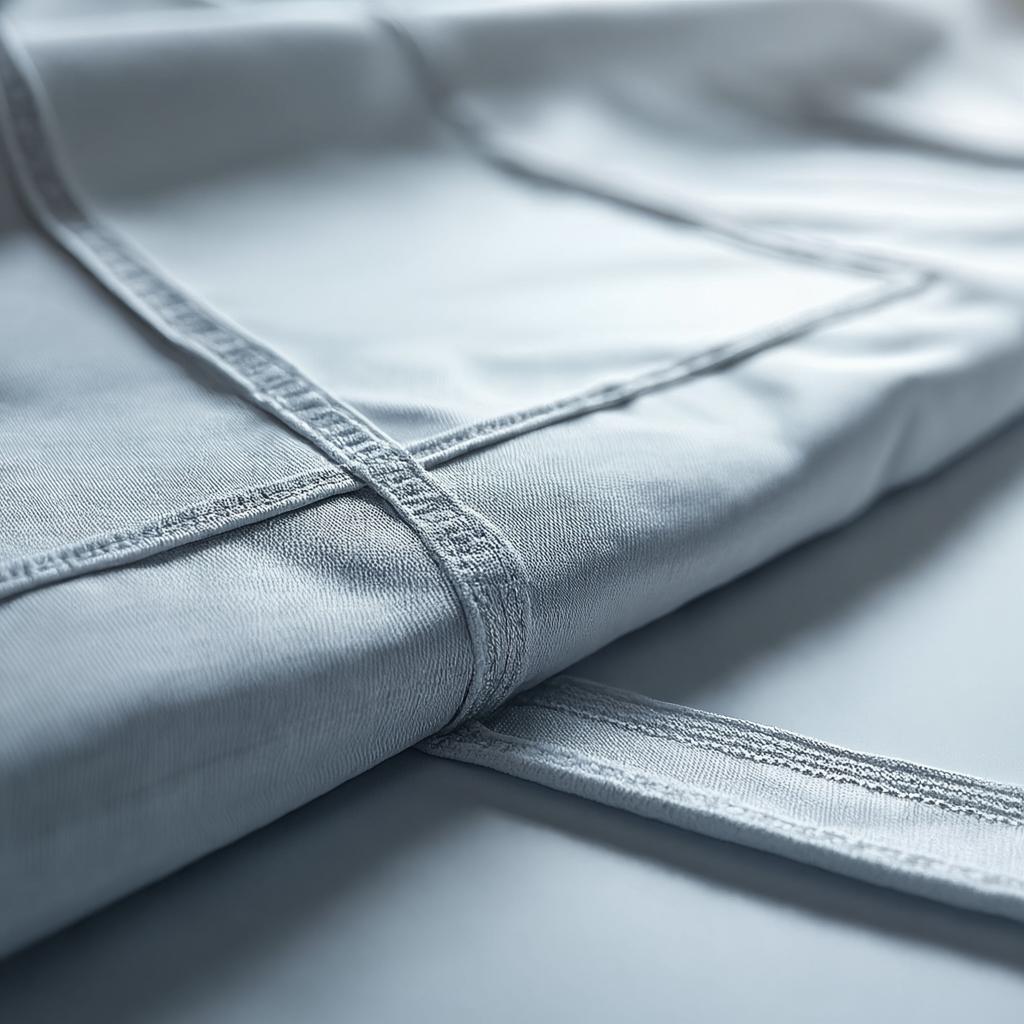
Seam pull test. This is the test that catches the problems ISO certificates miss. Take a seam sample from the production line. Clamp both sides in a force gauge. Pull until failure. The seam should withstand the specified force — typically 15 to 25 kg for structural seams on 600D fabric — before the stitch line breaks. If the fabric tears before the seam, the seam is stronger than the base material. That is the goal.
Hardware pull test. Every zipper, buckle, D-ring, and drawstring anchor point. A simple spring scale pull test to the specified force. If a zipper pull separates from the tape at 12 kg when the spec is 15 kg, the entire hardware batch is suspect. Reject and quarantine before more units are produced with the same batch.
RF-welded seam integrity. For covers using RF-welded seams — common on PU-coated nylon and TPU laminates — the inline check is a water column test on a seam sample. The welded seam must hold the rated hydrostatic head without leaking. A pinhole in an RF weld might be invisible to the eye but will leak under pressure.
4. Final Inspection: AQL Standards and What They Actually Mean
AQL stands for Acceptable Quality Level. It is the statistical sampling standard defined by ISO 2859 that determines how many units to inspect and how many defects are acceptable before rejecting the entire lot. Most cover contracts specify AQL 2.5 Level II Normal. Here is what that actually means in practice.
For an order of 500 covers, AQL 2.5 Level II Normal requires inspecting 80 randomly selected units. If 5 or fewer units have defects, the lot passes. If 6 or more have defects, the lot fails. This sounds reasonable on paper. The problem: AQL classifies defects into three categories — critical, major, and minor — and most cover contracts only reject on critical or major defects.
Critical defects are safety hazards: exposed sharp hardware, flame retardant failure, a drawstring that creates a strangulation risk. Zero critical defects are allowed. Even one critical defect in the sample means the entire lot is rejected.
Major defects affect function: a seam that fails the pull test, a zipper that does not close, a dimension that is off by more than the tolerance, coating delamination visible on inspection. AQL 2.5 allows up to 5 major defects in an 80-unit sample.
Minor defects are cosmetic: a small thread tail, slight color variation, a logo printed 3 mm off center. AQL 4.0 typically applies — up to 7 minor defects in 80 units. Most end customers do not care about minor defects. But when minor defects accumulate — a cover with a thread tail, a crooked logo, and a slightly off-color panel — the perceived quality drops even though each individual defect passes AQL.
For OEM covers going to retail or direct to end users, specify AQL 1.5 instead of 2.5. The inspection sample jumps from 80 to 125 units for a 500-unit order, and the allowable major defects drop from 5 to 3. The factory labor cost increases by about 3-5% per unit. For industrial machine covers where a failure means unplanned downtime on a $200,000 piece of equipment, that 3-5% is cheap insurance.
5. Third-Party Testing: Flame, UV, and Tensile Certifications
Factory self-testing is necessary but not sufficient. A factory QC station can verify stitch density and seam strength. It cannot perform a calibrated UV aging test or a certified flame resistance test to NFPA 701 or ASTM E84. Those tests require accredited third-party laboratories.
For any custom machine cover order where the spec sheet calls for flame retardant properties, demand a test certificate from an ISO 17025 accredited lab — not a supplier declaration. The difference matters. A supplier declaration says "we believe this fabric meets NFPA 701." A third-party certificate says "an independent lab tested this fabric to NFPA 701 on this date with this result." If the cover fails in the field and there is a fire incident, only one of those holds up in an insurance investigation.
The third-party tests that matter for industrial covers:
- Flame resistance: NFPA 701 (USA), EN 13501 (EU), BS 5852 (UK). Different markets, different standards. A cover that passes NFPA 701 might not pass EN 13501 because the test methods differ.
- UV aging: ASTM G154 or ISO 4892. Measures tensile strength retention after accelerated UV exposure. A fabric that retains 70% of tensile strength after 500 hours of UV exposure will survive roughly 2-3 years outdoors in temperate climates.
- Tensile and tear strength: ASTM D5034 (grab test) and ASTM D2261 (tongue tear). These numbers determine whether the cover survives wind loading or snags on machinery.
- Hydrostatic head: ISO 811 or AATCC 127. Measures water penetration pressure in mm of water column. For outdoor industrial covers, 3,000 mm minimum. For covers in pressure-wash environments, 10,000 mm.
- Cold crack: ASTM D2136. Tests coating flexibility at low temperature. A PVC coating that cracks at -10°C is useless for covers stored in unheated warehouses in northern climates.
For a deeper look at how these material specs translate into field durability, see our industrial cover durability guide and Oxford fabric guide.
6. Pre-Shipment Inspection: The Last Gate Before the Port
Pre-shipment inspection is the final QC gate. It happens after 100% of production is complete and at least 80% is packed. The inspector draws a random sample, opens the polybags, and performs a full inspection against the spec sheet. This is the last chance to catch a problem before the container seals.
A proper pre-shipment inspection for custom machine covers includes:
Carton drop test. Take one packed carton from the shipment. Drop it from 1 meter onto a concrete floor on each face, each edge, and each corner — 10 drops total. Open the carton. If any cover inside is damaged or the packaging has failed, the entire packing specification needs revision before shipment.
Label and barcode scan. Scan the barcode on the polybag or carton. Verify it matches the PO, the SKU, and the quantity. A barcode that scans to the wrong product in the customer's warehouse system triggers a costly returns process that can wipe out the margin on the entire order.
Fit check on a template or actual machine. If the end machine is available — or a dimensional template — put the cover on it. Check that all access panels align. Check that drawstrings cinch without binding. Check that ventilation panels sit at the correct height. A cover that measures correctly on the QC table can still fit poorly on the machine because fabric drapes differently under tension.
Pull-test the first-use experience. Open and close every zipper three times. Cinch and release every drawstring. Attach and detach every buckle. If any closure binds, snags, or feels rough on the third cycle, it will fail on the thirtieth. The operator in the field will not be gentle.
7. Factory Audit Checklist for Custom Machine Covers
When you audit a factory — in person or via a third-party inspection service — here are the QC stations and questions that reveal whether the quality control standards are real or performative:
- Incoming material inspection station. Ask to see the logbook for the last three fabric deliveries. Does it show weight, width, coating adhesion, and color check results? Or is it blank?
- Cutting table QC. Ask the cutter to measure a piece against the pattern. Does the factory have a documented tolerance — and is the cutter aware of it?
- Sewing line pull-test station. Watch a seam pull test being performed. Is there a calibrated force gauge? Is someone recording results? Or is the gauge sitting in a drawer with dead batteries?
- Hardware attachment verification. Pick up a finished cover and pull on the zipper, the buckle, and the drawstring with moderate force. If anything moves, the reinforcement patch is missing or undersized.
- Final inspection lighting. The final QC table must have D65 daylight-rated lighting at a minimum of 1,000 lux. If the inspector is checking covers under a single fluorescent tube, color and coating defects are invisible.
- Sample retention. Does the factory keep a sealed reference sample from every production run? If a dispute arises six months later about what was approved, the reference sample is the only objective evidence.
- Third-party test reports. Ask for the most recent NFPA 701, UV aging, and tensile strength reports. Check the date. If the most recent report is more than 12 months old, the factory is either using old fabric stock or not retesting when they change suppliers.
- Non-conformance handling. Ask: "What happens when a cover fails the pull test?" A good factory shows you the quarantine area and the non-conformance report form. A bad factory gives you a vague answer about "we fix it."
This audit takes 90 minutes on the factory floor. It costs less than airfare to return and inspect a failed shipment. For a complete walkthrough of how a spec sheet becomes a finished cover, read our custom cover production process guide. For the procurement checklist that pairs with these QC standards, see our machine cover procurement checklist.
Need a QC Spec Sheet for Your Next Custom Cover Order?
Send us your machine dimensions and target quantity. We will respond within 48 hours with a complete QC specification — material test requirements, inline checkpoints, AQL level recommendation, and packaging spec — tailored to your application.
Request a QuoteReady to Source OEM Machine Covers With Real QC?
We have manufactured custom protective covers at our Ningbo facility for over 15 years. Every order includes documented incoming material inspection, inline pull tests, AQL-based final inspection, and a complete QC report — not just an ISO certificate on the wall.
Request a Quote →Sources & Industry References
- ISO 14120: Safety of Machinery — Guards — International standard for protective cover design requirements
- OSHA Machine Guarding Standards — U.S. regulatory requirements for equipment protection
- ThomasNet: Industrial Protective Covers Guide — Industry overview of cover types and materials
Frequently Asked Questions
What AQL level should I specify for custom machine covers?
For industrial machine covers where a failure means equipment downtime, specify AQL 1.5 Level II Normal for major defects and zero-tolerance for critical defects. For consumer-grade covers (BBQ, patio furniture), AQL 2.5 is industry standard. AQL 1.5 increases inspection sample size by approximately 50% and adds 3-5% to per-unit labor cost but reduces field defect rates by roughly half compared to AQL 2.5.
How do I verify a factory actually performs the QC they claim?
Three methods: (1) Unannounced inline audit — visit the factory floor without notice during your production run and watch the QC stations. (2) Require dated, timestamped QC checkpoint photos for every production stage — incoming material, inline pull tests, final inspection. (3) Hire a third-party inspection service (SGS, Bureau Veritas, Intertek) to perform a During Production Inspection (DPI) at 30-50% completion. A DPI catches systemic defects early enough to correct before the entire order is built.
What is the difference between inline QC and final inspection?
Inline QC happens during production — typically one check per 50 units at each production stage (cutting, sewing, hardware). It catches process drift before it produces defective units. Final inspection happens after 100% of production is complete. It catches defects that made it through inline QC. A factory that only does final inspection is gambling: if a sewing machine tension drifted on unit 51 and is found at final inspection on unit 500, all 449 units in between are potentially defective.
Do I need third-party testing if the factory has its own QC lab?
For basic checks like stitch density, seam pull strength, and dimensional accuracy — factory QC is sufficient provided the equipment is calibrated and the results are documented. For flame resistance (NFPA 701, ASTM E84), UV aging (ASTM G154), and chemical compliance (RoHS, REACH) — third-party testing from an ISO 17025 accredited lab is essential. Factory self-declarations on fire safety are not accepted by most insurance underwriters or retail compliance departments.