Commercial Patio Furniture Covers: What Hotel & Restaurant Buyers Need to Specify
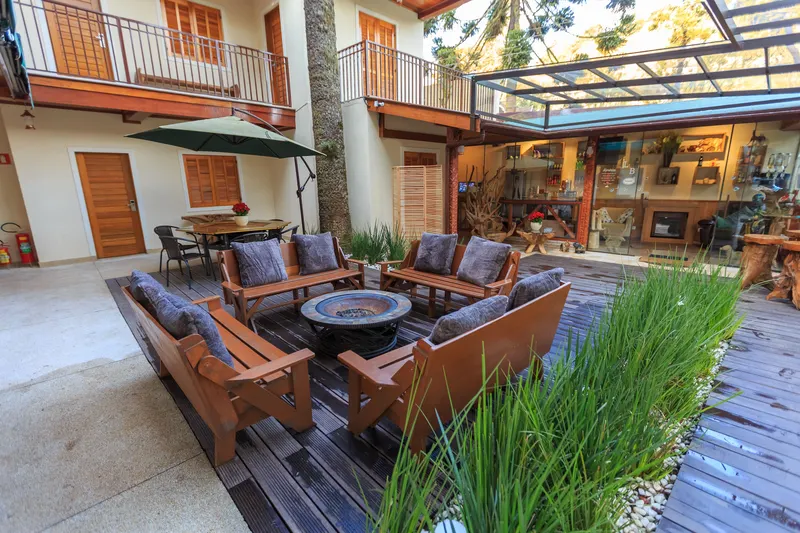
A hotel buyer ordering patio furniture covers is not the same customer as a homeowner buying one cover for the balcony. The specs are different, the failure costs are different, and the purchasing process is different. Yet most cover factories sell both from the same catalog.
This guide covers what changes when the covers are going into commercial use: fire behaviour, UV life under daily exposure, abrasion resistance against constant foot traffic, and the RFQ details that separate a cover that lasts a season from one that lasts a contract cycle.
Commercial vs Residential: What Actually Differs
Residential covers protect furniture that gets used a few hours a week. Commercial covers protect furniture that sits in direct sun all day, gets moved by staff, and is expected to look presentable in front of guests. That changes the specification in four ways:
- Fire behaviour. Many hospitality operators require flame-retardant fabric as part of their insurance and local fire code obligations. Ask whether the cover fabric carries a recognised FR treatment and what the standard is.
- UV life. A residential cover can yellow after two summers and still be acceptable. On a hotel terrace, fading and stiffening are visible to every guest. Specify UV-stabilised fabric with a defined lifespan in the RFQ.
- Abrasion and seam strength. Staff folding, stacking, and dragging furniture wears out covers fast. Seams and zippers need reinforcement at stress points, and the fabric needs to tolerate repeated folding without cracking.
- Replacement cost. A single damaged cover on a matched set means replacing the whole set or living with a mismatch. Commercial buyers should order spare capacity and agree colour-matching rules with the factory up front.
| Spec Point | Residential | Commercial (Hotel / Restaurant) |
|---|---|---|
| Fire rating | Usually not required | Often required, confirm local code |
| UV stabilisation | Standard grade | Extended life grade, specified in years |
| Seam reinforcement | Basic | Stress-point reinforcement, double stitching |
| Fabric weight | 300D-600D typical | 600D+ with PVC/TPU coating for commercial duty |
| Colour matching | Nice to have | Contract requirement, written into the order |
| Order pattern | Single units, seasonal | Bulk sets, planned replacement cycles |
For a deeper look at how fabric choice changes with the environment, see our custom machine cover material guide.
Where Commercial Covers Fail First
Most commercial cover failures are not fabric failures. They are specification failures that show up in the first season.
The most common one is buying a cover rated for occasional use and putting it into daily service. The fabric may be fine, but the zippers, the seams at the corners, and the attachment points were not designed for repeated handling.
On a hotel terrace, furniture gets moved every day for cleaning, and every move stresses the cover.
The second is ignoring wind. An open terrace is a wind tunnel. Covers need proper fastening points and a bottom closure that will not flap loose. A cover that blows off is not protecting anything, and in a guest area it is also a liability.
The third is assuming all FR fabrics behave the same. Flame retardancy is not a single property: it depends on the standard, the test method, and whether the treatment survives washing and weathering.
Ask the factory which standard the fabric is tested to, and get it in writing. Our guide to fire-retardant industrial covers explains the differences in more depth.
Not For Every Commercial Setting
A custom commercial cover is the right call for permanent terrace furniture, branded outdoor dining sets, and equipment that needs protection all year round. It is not the right call for every situation.
- Furniture that is stored indoors between uses. If the chairs go into a storage room at night, a heavy commercial cover is wasted cost. A lighter dust cover does the job.
- Food-contact surfaces. Covers are not food-grade surfaces. If a cover touches plates, glasses, or prep surfaces, you need a food-safe material specification, not a standard outdoor fabric.
- One-time or seasonal-only protection. If the terrace is only used three months a year and furniture is moved indoors after that, disposable or lightweight covers may be more cost-effective.
Clarity on the not-for cases is what makes the for cases credible. A factory that tells you when you do not need the premium spec is a factory you can trust with the orders where you do.
What to Put in the RFQ
Commercial buyers get better results from a written specification than from a "best cover for hotel" conversation. Put these points in the RFQ:
- Use case and duty cycle: how many days per year, how many hours of direct sun, whether furniture is moved daily.
- Fire and compliance requirements: the specific standard or local code you must meet, not a general "flame retardant" request.
- Fabric and coating: weight, material, coating type, and UV life in years.
- Fastening and closures: how the cover attaches, where the fastening points are, and what happens in wind.
- Colour matching and branding: Pantone references, logo placement, and replacement-set rules.
- Sample and testing: pre-production sample approval, and which tests (abrasion, UV, water) the factory will run.
If you are new to specifying custom covers for equipment rather than furniture, our industrial equipment cover spec guide covers the same RFQ discipline for a different product family.
FAQ
Do hotel patio covers need to be fire retardant?
Often yes, but it depends on local fire codes and the operator's insurance requirements. Confirm the specific standard you need to meet, then ask the factory which FR treatment and test method applies. Never assume one FR fabric meets every code.
How long should a commercial outdoor furniture cover last?
With UV-stabilised fabric and a proper coating, a commercial cover in daily outdoor service should last several seasons before significant fading or stiffening. The lifespan depends on sun exposure, wind, and how often it is handled. Specify a target life in the RFQ and agree a replacement schedule.
Can covers be branded with the hotel logo?
Yes. Woven labels, printed panels, and custom colours are all possible on OEM orders. For a matched terrace set, specify the logo placement and colour references in the order so every cover in the batch matches.
What is the minimum order quantity for commercial covers?
MOQ depends on the design and materials. Custom colours and branded runs carry higher minimums because of setup and pattern costs. Tell us your target volume and we can discuss the right batch size for your first order.