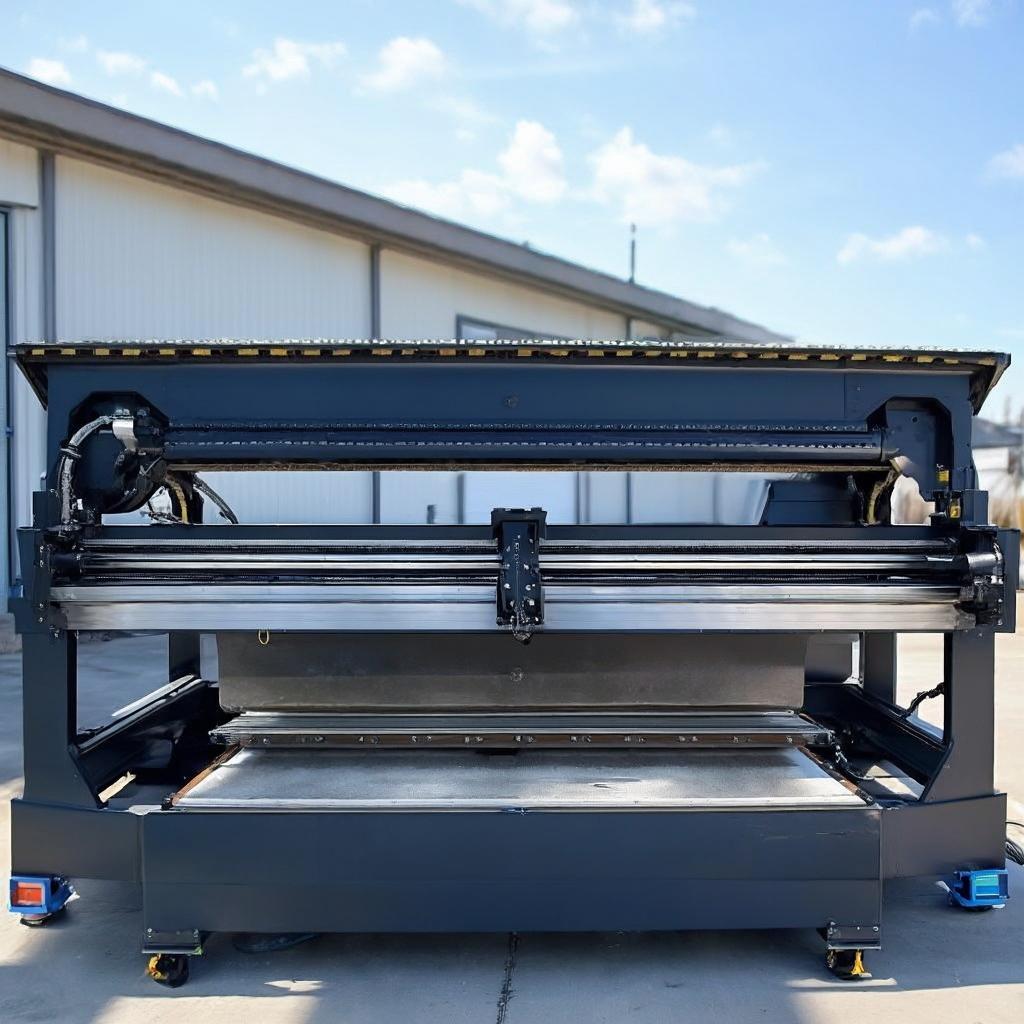
Your CNC router is likely one of your most valuable investments. Protecting it properly in Canadian or US winters is essential for maintaining precision, preventing corrosion, and extending its lifespan.
In this guide, we'll walk you through how to choose the right VINYL cover for your specific CNC router, considering size, material, features, and your local climate.
Step 1: Identify Your CNC Router Type
Different CNC routers have different protection needs:
Table CNC Routers
Sliding table saws with CNC heads need covers that accommodate the table sliding mechanism. Consider:
- Extra length for table slide
- Easy access to controls
- Protection of both table and CNC head
Benchtop CNC Routers
Smaller, more portable routers need compact, easy-to-install covers. Consider:
- Lightweight and easy to handle
- Tight fit for compact size
- Quick access for frequent use
Industrial CNC Routers
- Large equipment needs substantial protection
- Multiple access points needed
- Heavy-duty construction for durability
Production Line CNC Systems
- Multiple units need coordinated protection
- Workflow compatibility considerations
- Minimal disruption during operation
Step 2: Measure Your CNC Router
Accurate measurements are essential for proper fit. Here's how to measure different types of CNC routers:
Important: Always measure at the equipment's widest point. A slightly larger cover is better than one that doesn't fit at all.
Table CNC Router Measurements
Measure separately:
- Width: Include the table at full extension
- Length: Include the CNC head and any attachments
- Height: From table surface to highest point (including controls, handles)
Benchtop CNC Router Measurements
Measure:
- Width: Full width including all extensions
- Depth: From front to back including all protrusions
- Height: From base to highest point
Industrial CNC Router Measurements
Measure:
- Length: Full length from front to back
- Width: Width at widest point
- Height: From floor to highest point
- Special features: Note any controls, chutes, or protrusions that need accommodation
Measurement Tip: Take photos of your equipment from multiple angles. Share these with your cover manufacturer for accurate sizing.
Step 3: Choose the Right VINYL Specifications
Not all VINYL is the same. Here are the specifications to look for:
Cold Crack Resistance
Required: -40°F (-40°C)
Why: Canadian and US winters can drop to -30°C or lower. Only -40°F rated material remains flexible in extreme cold.
Material Weight
Recommend: 18 oz VINYL (600g/m²)
Why: Provides good durability and protection without being too heavy or stiff. Heavier materials (24oz+) can be difficult to work with.
Waterproofing
Required: 100% waterproof
Why: Moisture is the enemy of CNC machinery electronics. 100% waterproofing with heat-sealed seams is essential.
UV Resistance
Required: UV stabilized
Why: Workshop lighting and windows can cause UV degradation. UV stabilization extends cover lifespan in mixed environments.
Step 4: Consider Essential Features
Beyond material and size, certain features make CNC router covers more practical and effective:
- Easy Access: CNC routers often need to be accessed regularly. Covers with strategically placed access points (zippers, flaps) make this practical without compromising protection.
- Ventilation: For covered routers that need occasional operation or heat dissipation, consider covers with ventilation features to prevent moisture buildup and heat damage.
- Secure Fasteners: Strong grommets or other fastening systems ensure covers stay in place, even in windy conditions.
- Reinforced Seams: Stress points get the most wear. Double-stitched or heat-welded seams provide extra durability.
- Custom Fit: Custom-fitted covers provide better protection and are easier to work with than universal covers.
Step 5: Climate Considerations
Your local climate affects what you need:
Climate Guide
-30°F recommended
-30°F recommended
-40°F required
-40°F essential
Important: Even if your winter temperatures are typically milder, consider having -40°F rated covers for protection during extreme cold snaps, which are becoming more common.
Step 6: Get Quotes from Multiple Suppliers
Compare quotes to ensure you're getting good value:
- Request detailed specifications: Include your measurements, climate location, and intended use when requesting quotes.
- Compare materials: Ensure all quotes use -40°F rated VINYL (or equivalent cold crack specification).
- Check customization options: See what's included in the price and what's considered extra.
- Understand production and delivery: Know how long production takes and when to expect delivery.
Sample First: Consider ordering a sample cover before committing to bulk orders. This lets you evaluate the quality, fit, and material before making a larger investment.
Common CNC Router Mistakes to Avoid
Undersized Covers
Buying a smaller cover to save money can expose parts that need protection. It's better to spend a little more for full coverage than lose a lot to equipment damage.
Wrong Material
Canvas or polyester covers may seem cheaper initially, but they crack in cold weather. The replacement cost will exceed the initial savings.
Poor Fit
Covers that are too small or too large won't protect properly. A cover that doesn't fit is no protection at all.
No Access Planning
Covers that are hard to put on and take off won't be used. Practical daily use is essential for protection to be effective.
Quick Checklist for Ordering
Before ordering:
- Measure your CNC router accurately
- Identify your local climate zone
- Determine access frequency needs
- Know your budget range
- List any special features required
When ordering:
- Provide exact measurements with photos
- Specify -40°F cold crack resistance requirement
- Request 100% waterproof with heat-sealed seams
- Include access features if needed
- Ask about production timeline and delivery
- Confirm warranty and return policy
Before finalizing:
- Review product specifications
- Compare 2-3 quotes
- Ask for a sample if unsure
- Check customer reviews if available
Investment Perspective
A quality VINYL cover for a CNC router typically costs between $200-500, depending on size and complexity. Here's the ROI breakdown:
Typical Cost Breakdown
Equipment value: $5,000-$50,000
Cover cost is 1-10% of equipment value
First year ROI: Typically 3-6 months through cost savings
Bottom line: The cost of a quality VINYL cover is minimal compared to the value it provides in equipment protection and lifespan extension.
Ready to Protect Your CNC Router?
Tell us about your CNC router and we'll provide a custom VINYL cover recommendation. Free assessment, no obligation.
Get Custom QuoteAbout the author: CustomMachineCover specializes in VINYL protective covers for woodworking machinery, designed for North American extreme cold climates.
Related articles: