Patio Heater Cover Size Guide: Measure It Right
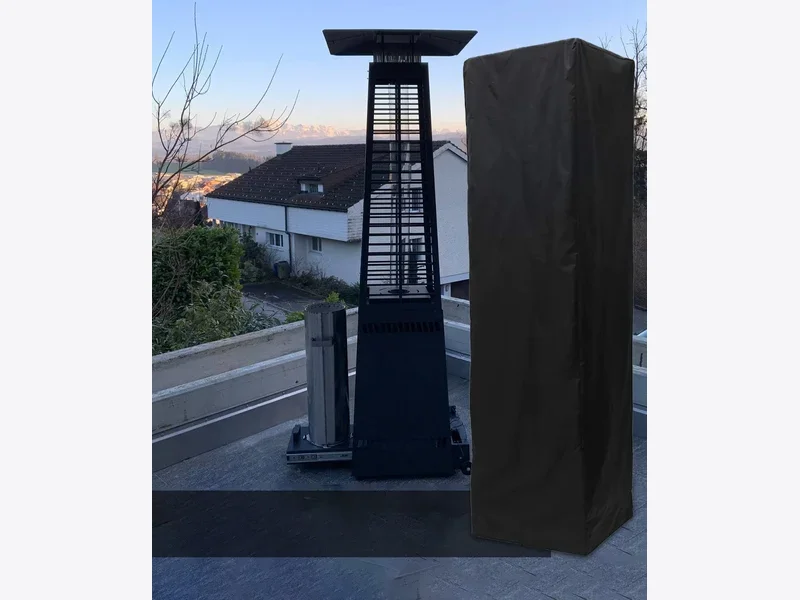
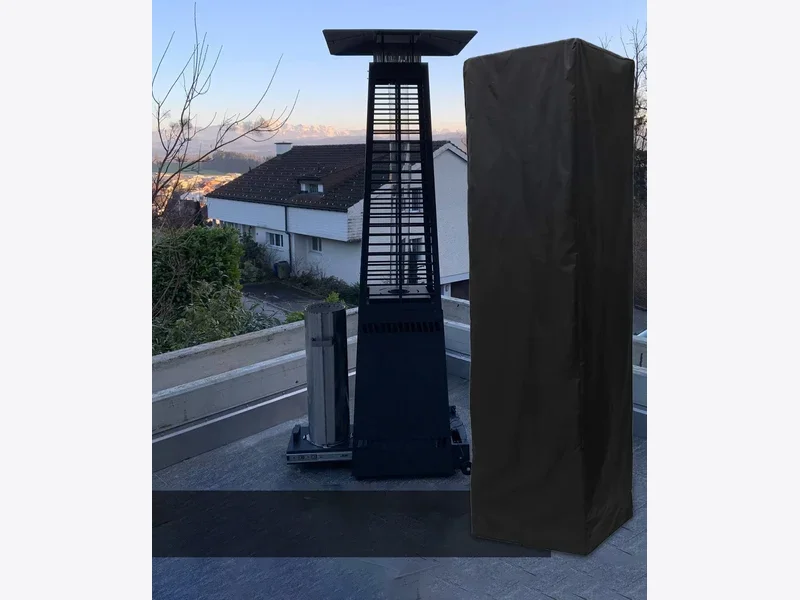
Size is the first decision in any patio heater cover order, and the one buyers get wrong most often. A cover that is too short leaves the reflector and upper column exposed to rain and UV; one that is too wide flaps in the wind, abrades against the base, and splits at the seams. Fit problems are the most common cause of cover returns, ahead of material and sewing defects.
This guide covers the three measurements that define every patio heater cover size, a size chart for common heater heights, the custom sizing process we run for OEM buyers, and the mistakes that cause most fit-related returns. The measurements you take today are the ones you will put on your own spec sheet tomorrow.
Why Size Is the First Decision
Every patio heater cover has two specs that matter: fit and material. Fit comes first because it is binary: a cover either drops over the heater and sits below the base rim, or it does not. Material affects how long the cover lasts; size affects whether it protects anything at all.
For distributors and heater brands, a wrong size costs more than one return: freight back, repack time, dead inventory, and dealers who quietly switch suppliers after a season of ill-fitting covers. Fit-related returns consistently outpace claims about fabric, seams, or stitching in our line.
When a cover is sized correctly, the heater is fully enclosed from reflector to base, the fabric stays taut enough to shed water, and the hem can be drawn snug so wind cannot get under it. For an overview of the full range, see our patio heater covers product page.
How to Measure a Patio Heater for a Cover
Three measurements define the cover size: overall height, base diameter, and shape. Take all three with the heater standing in its installed position.
Step 1: Overall height, measured to the top of the reflector. Read from the floor to the highest point of the reflector. The reflector is the tallest and widest part of most patio heaters, so it sets the minimum cover height. Measuring to the emitter tube instead leaves the reflector exposed, the most common sizing error in returned covers.
Step 2: Base diameter at the widest point. Measure across the base plate, wheel ring, or ballast tray from outside edge to outside edge. On mushroom-style heaters the reflector is wider than the base, so record that too; the larger number drives the top panel size.
Step 3: Confirm the shape. Patio heaters fall into three geometry families, and each needs a different cover pattern:
- Pyramid: straight column, square or round base, narrow hood; fitted body with a tapered top.
- Mushroom: slim column under a wide dome reflector; wide top panel with a drawstring hem at the narrow base.
- Tower: full-width cylindrical body, common on commercial units; simple cylinder with a closed top.
A heater listed at 2.4 m can be a pyramid, a mushroom, or a tower, and the height alone never tells the factory which pattern to cut. That is why we ask for shape on every dimension submission. See our patio heater cover material guide for the fabric side of the same decision.
Patio Heater Cover Size Chart
Most residential and light-commercial patio heaters sit between 2.0 m and 2.5 m tall. The chart below matches common heater heights to recommended cover sizes for standard pyramid and mushroom shapes with typical base diameters.
| Heater Height | Base Diameter | Recommended Cover Size | Typical Models |
|---|---|---|---|
| 2.0–2.2 m | 45–55 cm | 2.3 m tall, 65–70 cm base opening | Compact pyramids, garden centre models |
| 2.3–2.4 m | 50–60 cm | 2.5 m tall, 70–75 cm base opening | Standard pyramids and mushrooms, most common range |
| 2.4–2.5 m | 60–70 cm | 2.6–2.7 m tall, 75–80 cm base opening | Tall towers, wide-base mushrooms, commercial patios |
Two rules apply to every row. First, add 10 to 15 cm of clearance on height and width so the cover settles below the base rim without stretching. Second, when a heater sits between two sizes, size up: a slightly larger cover protects completely, while an undersized one fails at the reflector.
If your heaters carry a gas canister tray, wheeled base, or decorative finial, measure those protrusions and include them. They are why the same nominal heater height can need two different cover sizes.
Custom Sizing: When Standard Sizes Do Not Fit
Commercial units, angled columns, double-reflector models, and heaters with integrated gas compartments regularly fall outside the standard size range. For those, we cut custom patterns from the buyer's own measurements. This is the normal path for OEM and private-label orders, not an exception process.
What to send with your inquiry:
- Heater model number and brand, if available.
- Overall height to the reflector top, base diameter, and shape (pyramid, mushroom, or tower).
- Photos from two angles, with a tape measure visible in the frame.
- Access points the cover must respect: gas valve openings, hose exits, handle positions.
Our factory team reviews the dimensions, confirms the pattern, and produces a sample before bulk production, so the size is locked before a single production roll is cut. Buyers who reorder the same models keep their measurement sheets on file, making reorders a one-email job. For the full factory-direct process, see our patio heater covers wholesale guide.
Five Common Measuring Mistakes
These five errors account for most size-related returns we process, and each is easy to prevent on the first order.
- Measuring to the emitter tube instead of the reflector. The reflector sits 15 to 30 cm above the emitter on most models. Measured to the tube, a 2.4 m heater reads as 2.2 m, and the cover comes up short on the most exposed part of the unit.
- Measuring the base only. Two heaters with identical bases can differ by 40 cm in height. The base tells you the bottom opening, never the cover length; ordering from base diameter alone produces covers that stop at the reflector.
- Ignoring the tilt. Angled heaters are installed with a visible lean. A vertical tape measure against a leaning column reads short, so measure the true top point to the floor or add a lean allowance before ordering.
- Measuring in the wrong units or the wrong state. A cover ordered in feet for a heater measured in metres, or measured while the heater is still strapped to a pallet, produces a cover that fits nothing it ships with.
- Forgetting what protrudes. Gas canister trays, wheel rings, handles, and finials all widen the effective profile. A cover sized to the bare column will not drop over them.
The fix for all five is the same: submit the three core measurements plus a photo and let the factory confirm the pattern before production. On bulk orders this costs nothing extra.
Patio Heater Cover Size FAQ
How do I measure a patio heater for a cover?
Take three measurements: overall height to the top of the reflector (not the emitter tube), base diameter at the widest point including wheels or ballast ring, and the heater shape (pyramid, mushroom, or tower). Add 10 to 15 cm of clearance on height and width, then compare against a patio heater cover size chart.
What size cover do I need for a 2.4 m patio heater?
A 2.4 m patio heater with a base diameter of 50 to 60 cm normally takes a 2.5 m tall cover with a 70 to 75 cm base opening. If the heater has an extra-wide reflector or gas tray, size up to a 2.6 to 2.7 m cover or request a custom size.
Can I order custom-sized patio heater covers in bulk?
Yes. Send your heater model number or three dimensions (height including reflector, base diameter, shape) plus a photo. Our factory reviews the measurements, makes a sample pattern, and confirms the size before bulk production, so every cover matches the heater it ships with.
Should a patio heater cover be bigger than the heater?
Yes, by 10 to 15 cm on height and width. That clearance lets the cover drop fully over the reflector and sit below the base rim without stretching. A slightly larger cover protects completely; an undersized one leaves the reflector exposed, the most common cause of fit-related returns.
Need Patio Heater Covers in Bulk?
Send us your heater models or dimensions, target volume, and packaging requirements. Our factory team will confirm cover sizes, recommend the right material, and send you a quote with lead times.
Request a Quote →Once the material is settled, the next question is quantity: our machine cover size calculator turns machine length, width and height into the flat panel size and fabric area you need to put in an RFQ.